
Classification of dense phase pneumatic conveying and dilute phase pneumatic conveying
In powder transportation, based on the concentration of powder in the conveying pipeline,Pneumatic conveying systemIt can be divided into dense and dilute phase conveying systems: according to the conveying pressure, it can be divided into positive pressure conveying systems and negative pressure conveying systems. In the negative pressure pneumatic conveying system, the pressure inside the pipeline is lower than atmospheric pressure, and the material is sucked into the pipeline, but it must be discharged under negative pressure, and the conveying distance is too short. The main feature is that materials can be transported from multiple points in bulk to high and point-to-point transportation: the pressure in the pipeline of the pressure conveying system is higher than atmospheric pressure, making unloading convenient and the conveying distance long. However, the powder particles must be pressurized into the pipeline by the feeder.
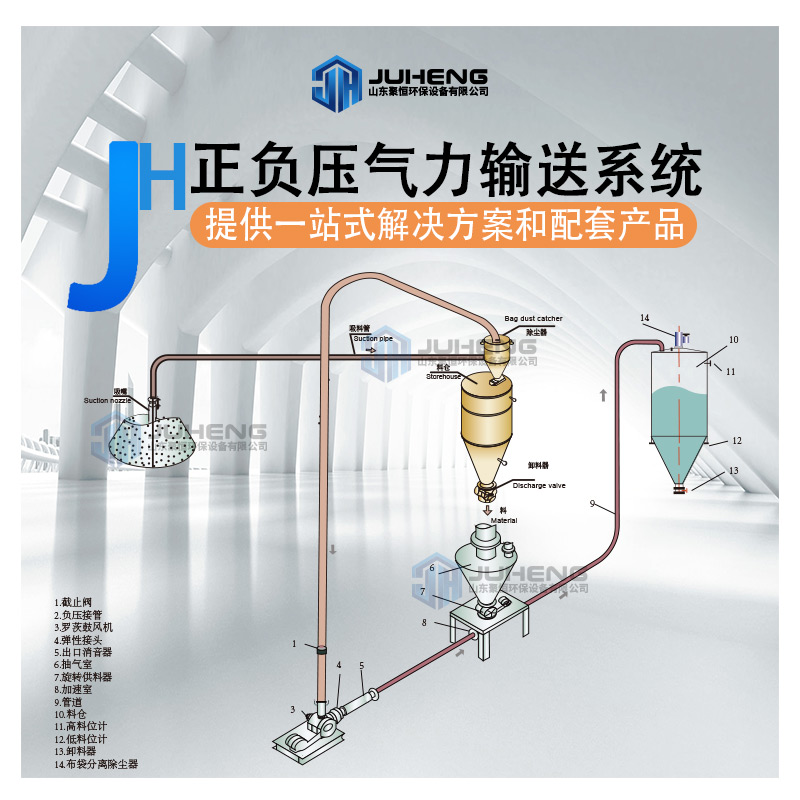
The conveying method using high-speed airflow and low solid to gas ratio is dilute phase pneumatic conveying. The solid content is less than 100kg/m3 or the solid gas ratio (the mass flow rate ratio of solid transport volume to corresponding gas consumption) is 0.1-0.25. The working gas has a high flow rate and a long conveying distance. Use Roots blower as the air source equipment and transport with air or nitrogen. The dense phase pneumatic conveying system is a conveying method that uses compressed air to transport materials to their destination. Solid content greater than 100kg/m3 or solid gas ratio greater than 25. Press with higher air pressure. In terms of environmental protection and energy conservation, it is much better than mechanical transportation and hydraulic transportation. Concentrated phase conveying is divided into tank conveying and rotary valve conveying. Air or nitrogen is generally used for gas transportation, and the power is usually provided by compressors and screw pumps, with low energy consumption.Pneumatic conveying systemThe calculation is very complex and does not fall within the scope of environmental engineering, so it will not be repeated here.