Grain unloading ship pneumatic conveying
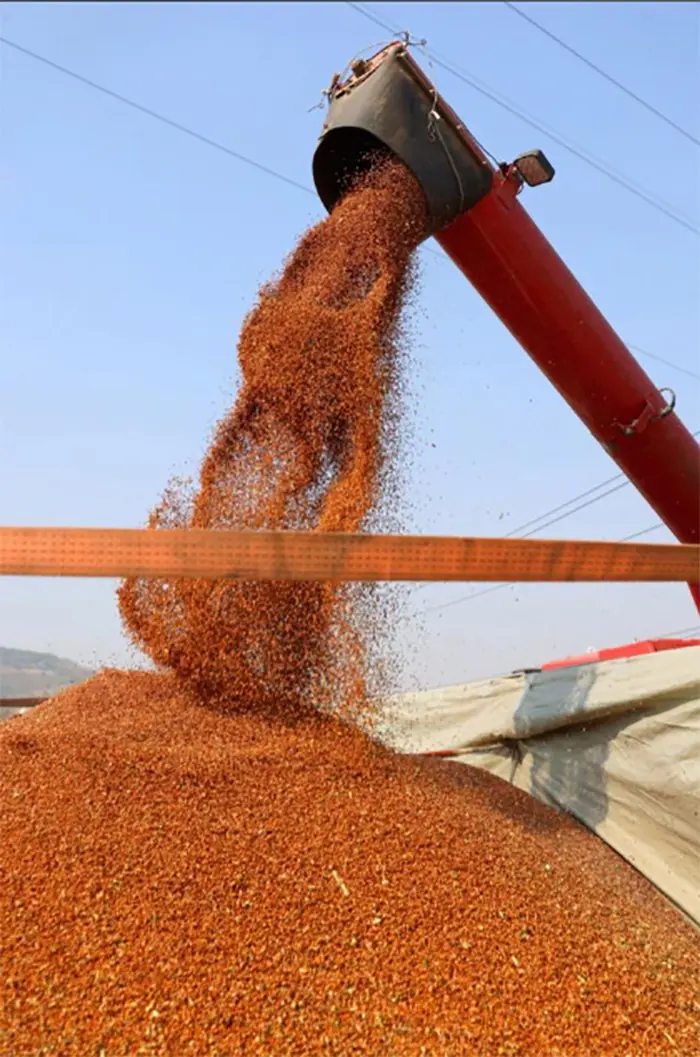
Grain unloading pneumatic conveying is essentially a negative pressure suction pneumatic conveying method, which uses air as the conveying medium and utilizes the airflow generated by negative pressure in the pipeline to "suck" grain particles from the ship's hold to the dock side, and then completes the unloading operation through gas-solid separation and unloading buffer. The entire process relies on closed pipelines for operation, which can not only avoid the scattering and loss of grain, but also control dust from the source, making it the mainstream environmental protection solution for grain unloading in ports. The overall workflow operates in a closed-loop system consisting of four stages: "picking, conveying, separation, and unloading". At the same time, a dedicated adaptation mechanism is designed to prevent breakage and blockage based on the characteristics of grain particles. The specific principles are as follows: 1. Core workflow 1 Negative pressure construction: Establish a power foundation system with the power source arranged at the end of the dock shore, and after starting, create a negative pressure environment inside the entire conveying pipeline that is lower than the external atmospheric pressure. At this point, a pressure difference is formed between the external atmosphere and the interior of the pipeline, which is the core driving force for the movement of grain particles and the essence of "suction". 2. In ship material retrieval: The gas material mixture is used to start the dock operation. The dock operator operates the adjustable and extendable unloading arm, and extends the front suction nozzle into the grain pile in the cabin. Due to the negative pressure inside the pipeline, external air will pass through the suction nozzle at high speed, and at the same time, it will "wrap" the grain particles around the suction nozzle, completing the initial mixing of gas and material at the suction nozzle, forming a two-phase flow of gas and grain, and entering the conveying pipeline. For the leftover materials in the corners of the cabin, they can be collected from the entire cabin without blind spots by moving the suction nozzle or using an auxiliary scraping device. 3. Pipeline transportation: The two-phase flow of gas and grain, driven by negative pressure airflow, flows along the unloading arm pipeline and the shore side fixed pipeline towards the end of the shore side. During the transportation process, the kinetic energy of the airflow is transferred to the grain particles, pushing them forward along with the airflow. Grain particles move in a suspended or slightly sliding state inside the pipeline, completely enclosed in a closed space, with no grain leakage or dust flying. 4. Shore separation: Effective separation of gas and grain. When the two-phase flow of gas and grain reaches the separation equipment on the shore, the velocity of the airflow slows down, and the grain particles separate from the air under the action of gravity and centrifugal force. Grain particles settle down from the airflow and fall into the buffer bin or unloading equipment below; Dust laden air: continues to enter the subsequent dust removal system, completes dust purification, and meets emission standards. 5. Unloading buffer: Grain separated from subsequent processes is temporarily stored in the buffer warehouse, and then transferred to the dock yard, silo, or subsequent transfer vehicle through the unloading device to complete the entire unloading process. 2、 The exclusive adaptation principle of grain materials: Grain belongs to granular materials, which are brittle, easy to break, and have good fluidity and are not easy to bond. Therefore, based on the universal negative pressure principle, two key adaptation designs have been added to the pneumatic conveying of grain unloading ships: low crushing design: by optimizing the structure of the suction nozzle and controlling the flow rate of the pipeline, it avoids severe collisions and friction of grain particles during the suction and transportation process, minimizes the generation of broken grain, and ensures the quality of grain; Anti clogging design: Grain particles have no adhesive properties and are not easily clogged due to sedimentation. The system will also install air replenishment devices at key locations in the pipeline. If there is local material accumulation, air replenishment can be used
- Application of Mobile Negative Pressure Ship Unloader
- Fixed negative pressure unloading system
- Negative pressure dust funnel system
READ MORE