The influence of air volume on pneumatic conveying
With the change of air volume in pneumatic conveying, the conveying capacity of pneumatic conveying will also be affected. Based on Juheng's continuous experiments, the following summary is made:

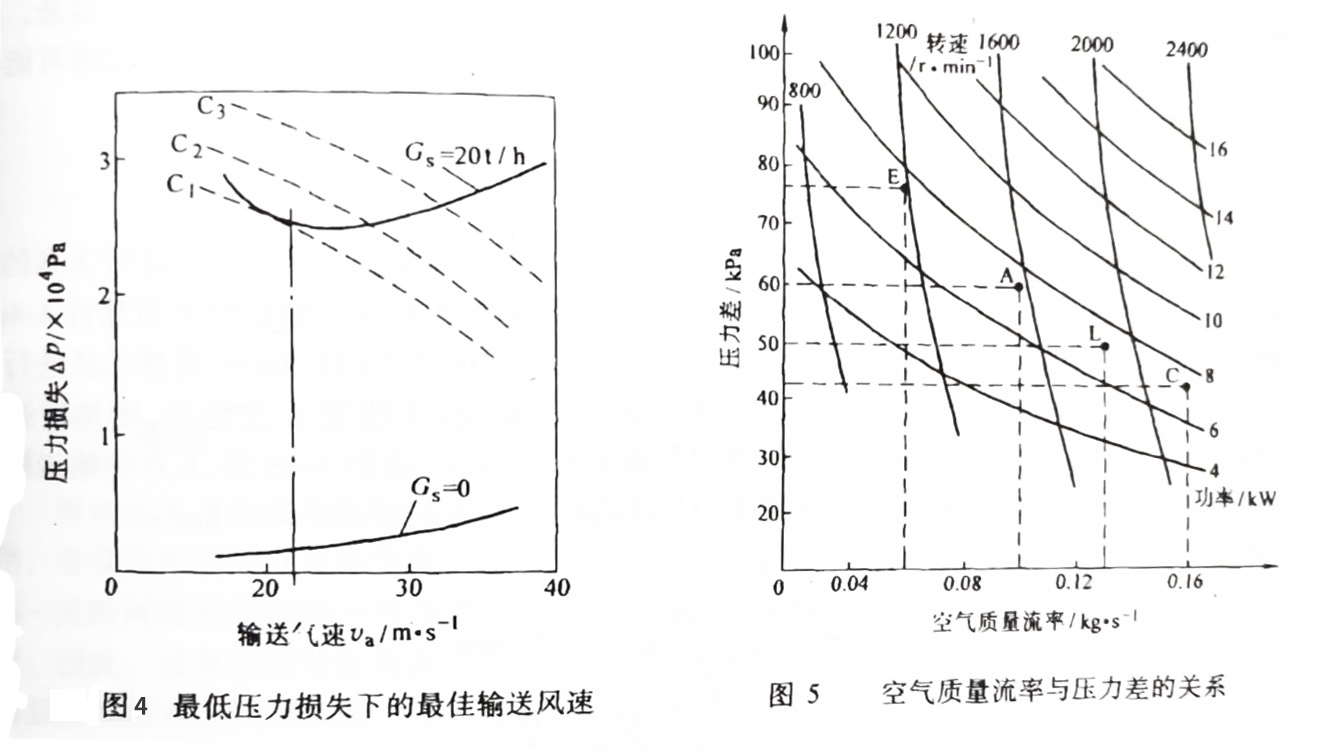
1. The reduction effect of increasing air volume is compared with increasing air volume by 60%. There are two methods to increase air volume: switching to a large fan or increasing the speed of the original fan. If a fan with a 60% increase in air volume and a supply pressure of 60kPa is used instead, it will be changed to point B in Figure 2. Obviously, the conveying capacity has decreased to 2.7/h, resulting in a 40% reduction in production. According to Figure 3, the conveying wind speed has increased to 42.2m/s. If the fan speed is increased, it will cause a decrease in gas supply pressure. According to Figure 5, since the power of the original fan is still 7.4kw and the air volume has increased by 60%, the air mass flow rate (air volume) is 0.16kg/s, and the speed has increased to 2200r/min, the operating condition has been changed to point C, and the air supply pressure has decreased to 42kPa. Meanwhile, according to Figure 2, the conveying capacity at point C is only 1t/h, which is about a 77% reduction in production.
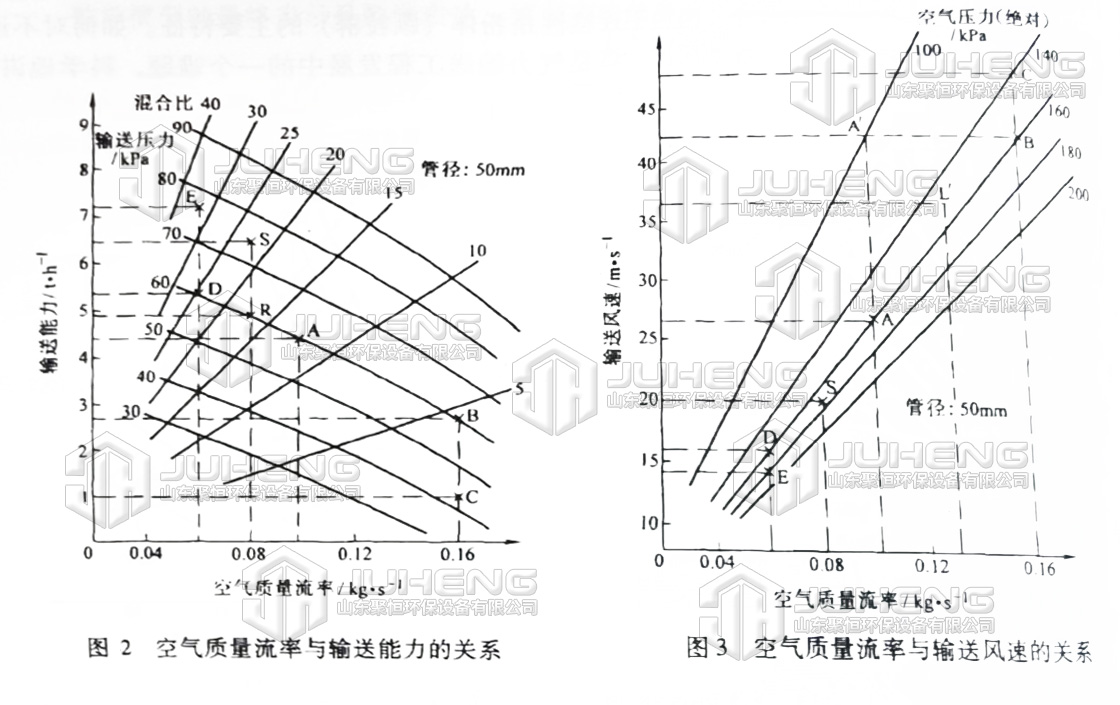
2. Compare the effect of increasing production by reducing air volume by 40%. There are also two methods to reduce air volume: venting or slowing down the fan speed. If 40% of the fan's air volume is emptied, that is, the actual used air volume is reduced from 0.10kg/s to 0.06kg/s, then on the 60kPa line in Figure 2, moving from point A to point D, the conveying capacity is increased to 5.3/h, increasing production by 20%. Meanwhile, as shown in Figure 3, the inlet wind speed at this time is only 16m/s. Of course, this value should exceed the minimum conveying wind speed, otherwise blockage may occur. If the original fan speed is slowed down to reduce the air volume by 40%, the power consumption will still be 7.4kW. As shown in Figure 5, the air volume will be reduced from 0.1kg/s to 0.06kg/s and changed to point E, with a speed of about 1200m/min and an air supply pressure of 0.77kPa. According to Figure 2, the conveying capacity at point E is 7.2/h, resulting in a 64% increase in production. On Figure 3, the minimum wind speed at point E is only 14.4m/s, which exceeds the critical wind speed (see Figure 1) at a mixing ratio of 33 (see Figure 2).