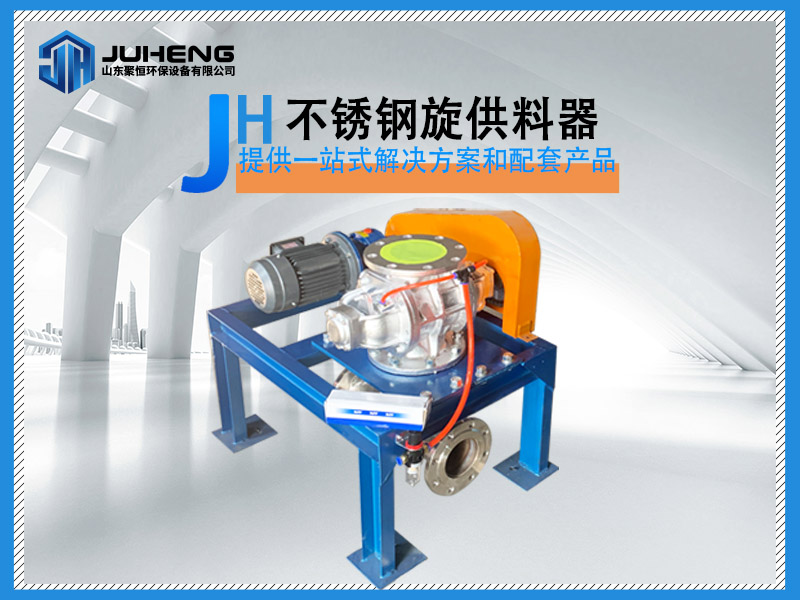
Unloader device for pneumatic conveying
In pneumatic conveying devices, unloaders (dust collectors) are often used to discharge materials and dust, and to prevent external air from entering the pneumatic conveying system during the discharge process. At present,Unloader (ash unloader)There are mainly several types, such as impeller type and valve type.
1、 Wheel type unloader
1. Basic characteristics: The impeller unloader is the most commonly used discharge equipment in pneumatic conveying systems, and it is used as a feeder in medium and low-pressure pressure feeding systems. In the powder processing, it is widely used, not only for feeding and unloading, but also for measuring and batching.
The impeller type unloader has a simple structure, reliable operation, small volume, and easy manufacturing. It consists of a rotating impeller with a grid chamber and a fixed shell, suitable for discharging powdery and small block materials with good flowability and low grindability.
When the impeller is driven by the transmission mechanism to rotate inside the housing, the granular material falling from the upper separator (or hopper) enters the impeller compartment through the feed port and is sent to the discharge port for discharge along with the rotation of the impeller. Throughout the entire working process, this type of unloader is capable of continuously and quantitatively feeding and unloading materials. Due to the tight fit between the impeller and the shell, it has a certain degree of airtightness, which can reduce air leakage during the unloading process. Therefore, in pneumatic conveying systems, it is also known as an air lock, a locking device, etc.
2. The structural form of the impeller unloader varies depending on the characteristics and purposes of the discharged materials.
1) According to the arrangement of the transmission shaft, it can be divided into two types: horizontal shaft unloaders and vertical shaft unloaders. The former is widely used in powder engineering and pneumatic conveying systems, while the latter is only used to discharge fine-grained materials from the silo for batching, with higher manufacturing and management costs than the horizontal shaft type.
2) From the perspective of the basic structure of impellers, they can be divided into two types: impellers with side baffles and impellers without side baffles. The former discharges granular materials without direct contact with the outer shell end cover, but due to the possibility of dust leaking into the cavity between the side baffle and the outer shell end cover, it may sometimes affect the rotation of the impeller; The latter has a simpler structure, but the end cap is prone to wear when transporting abrasive materials.
3) Considering the requirements for good sealing performance, the impeller unloader has different featuresVertical axis unloaderThe structural characteristics of it can ensure that the blades are tightly attached to the inner wall of the shell during operation to reduce air leakage.
4) To prevent the material from being stuck by the rotating feeder,JuhengAdopting a unique blade design approach, it makes the conveying more fluid.