
Key operating points of pneumatic conveying
Due topneumatic conveyingThere are various types of devices with different principles and operating requirements, which are difficult to explain in detail in this article. Please refer to the user manual of Shandong Juheng Environmental Protection Equipment Co., Ltd. The following is only a brief introduction to the common parts.
1. The operation points of the pneumatic conveying device include the start stop, operation supervision, lubrication, and other operations of the pneumatic machinery, all of which are carried out using the instruction manual. The operating points of the pressure feeding pneumatic conveying device itself are roughly as follows:
Special attention should be paid to materials.
1) It is necessary to drain the oil and water accumulated in the gas water separator and gas storage tank, especially when transporting materials that are sensitive to moisture
2) Confirm that the gas source pressure is above the specified value and that the gas supply is sufficient.
3) Before formal feeding and conveying, it is best to empty feed once to confirm whether each control part is normal.
4) According to the selected unloading point. When conveying different materials, special attention should be paid to prevent mixing, and the wrong discharge point must not be selected.
5) Determine the number of boosters that should be activated based on the selected discharge point (except when there is an automatic activation device).
6) On the premise of confirming that the automatic control system is completely normal, the reliability of manual control should still be confirmed, so that in case of automatic control failure, manual control can still be used to troubleshoot.
7) After completing the above operations, the feeding and transportation can be carried out.
8) During intermittent conveying, always pay attention to the changes in pressure inside the bin pump during the conveying process, in order to stop gas supply at the end of the conveying (which will automatically stop during automatic control); During continuous transportation, it is also necessary to regularly observe changes in gas source pressure and transportation pressure. Once abnormalities occur, measures should be taken in a timely manner to prevent malfunctions.
9) After the delivery is completed, the inner wall of the sending tank should be cleaned in a timely manner to prevent material adhesion. If necessary, corresponding cleaning agents or lubricants should be sprayed as needed.
10) Finally, the feeding gate should be placed in the closed state to prevent accidental falling of foreign objects after work.
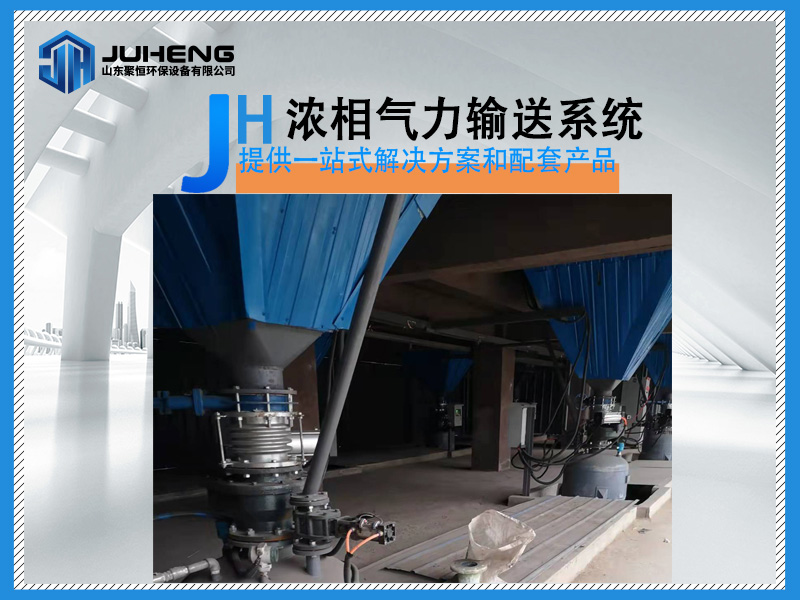
2. Operation points of suction type pneumatic conveying device. The suction type pneumatic conveying device is represented by grain suction machine, vacuum suction, and negative pressure container conveying. The following points are worth noting in operation:
1) The air source machinery must be started under no-load to prevent burning out the motor.
2) Inspect the flexible operation and sealing performance of each unloader.
3) The feeding amount of feeding equipment (disc feeder, vibrating feeder, etc.) should be accurate.
4) Firstly, the back blowing device and dust removal device of the pneumatic dust collector are activated, and then the blowing fan or vacuum pump is started,Wait for the fan to operate normally and the air volume to reach the specified value before starting the feeding equipment to begin conveying.
5) Regularly inspect the pipeline and related components after normal transmission, and promptly detect any signs of wear or leakage.
6) Timely lubrication should be applied to all operating components.
7) Once a decrease in conveying productivity or abnormal fan noise is detected, the feeding should be stopped in a timely manner, the cause should be identified, and the factors causing the above abnormalities should be thoroughly eliminated before re feeding can be carried out.
8) The depth of the material layer purchased by the suction nozzle should be adjusted in a timely manner to strictly prevent air "short circuits" caused by exposure outside the material layer. When multiple nozzles are working simultaneously, individual nozzles should be prevented from being exposed outside the material layer.
9) If an automatic control system is used, the reliability of "automatic" and "manual" should be confirmed.
10) The shutdown of the suction device should follow the reverse procedure of starting, that is, the feeding equipment should be stopped first, then the gas source machinery should be stopped, and finally the reverse blowing and cleaning mechanism of the dust collector should be stopped. In some cases, the dust discharge device under the dust collector is only activated after the back blowing and cleaning mechanism of the dust collector stops running.