
Solution to blockage of pneumatic conveying pipelines
pneumatic conveyingOnce a pipeline is blocked, the first step is to determine the location of the blockage, whether it is a complete or partial blockage. Usually, a small hammer is used to tap the pipeline, and the blocked area can be detected through sound. Then, effective measures can be taken to eliminate the fault based on the blockage situation.
The methods include:
1) If there is a slight blockage in the local area, the pressure of the sending tank can be increased to put the entire system under high pressure, and then a hammer can be used to tap the blocked area to loosen the material, which can be eliminated without dismantling the pipeline.
2) If the blockage is severe, the sending tank can be placed under high pressure, and then high-pressure air can be introduced from the intake pipe (usually closed) pre installed on the pipeline. The best sequence for ventilation is to start from the first blocked column near the discharge point and gradually move towards the sending tank. Due to the increased air pressure caused by the blockage between the material columns, the fault can be eliminated by tapping with a hammer.
3) If the blockage is more severe, the pipeline must be dismantled at the blockage and the blocked material must be dug out with a special hook or a 3-5m long spiral hose. This method is commonly used when materials such as casting sand that are prone to compaction and adhesion become clogged.
4) Once blocked, the most fundamental thing is to identify the cause of the blockage and take corresponding measures to avoid further blockage.
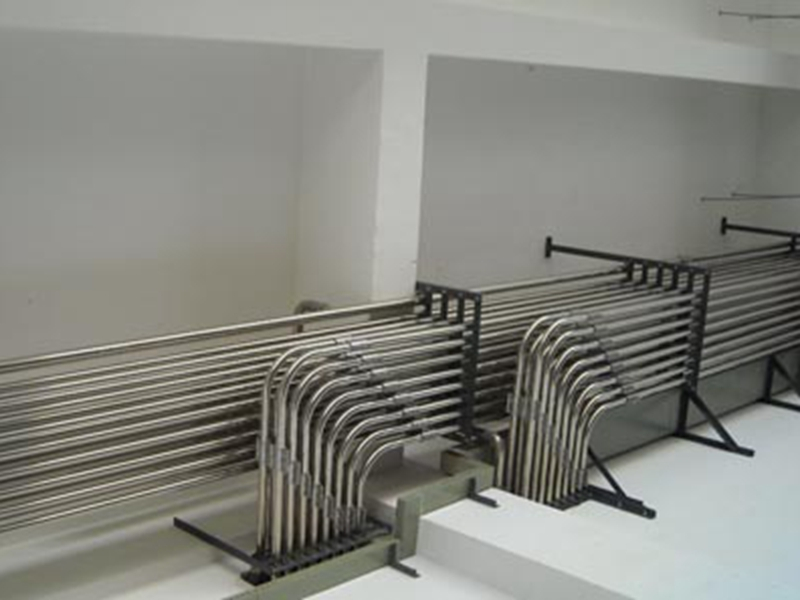
Pneumatic Pipeline