
Application of pneumatic conveying technology in mines
The application of pneumatic conveying in mines includes: pneumatic elevators for extracting miscellaneous coal underground, pneumatic filling of filling materials after coal mining, and pneumatic conveying of dry ground mineral powder in beneficiation plants.
In order to prevent the subsidence of the strata in coal mines and the formation of voids after mining, which may affect the safety of people and property on the ground, the method of backfilling is adopted. The new process of pneumatic filling is increasingly widely used both domestically and internationally. The scope of application for pneumatic filling should be based on geological conditions, and it can be fully filled or partially filled; The filling materials include rocks, gangue, slag, etc. Pneumatic filling is dense, with a settlement rate of 35% for the filling material, resulting in less surface subsidence. Pneumatic filling can be operated in parallel with mining and transportation to improve work efficiency, but it still has problems such as high energy consumption, high cost, easy pipeline blockage, and significant equipment wear.
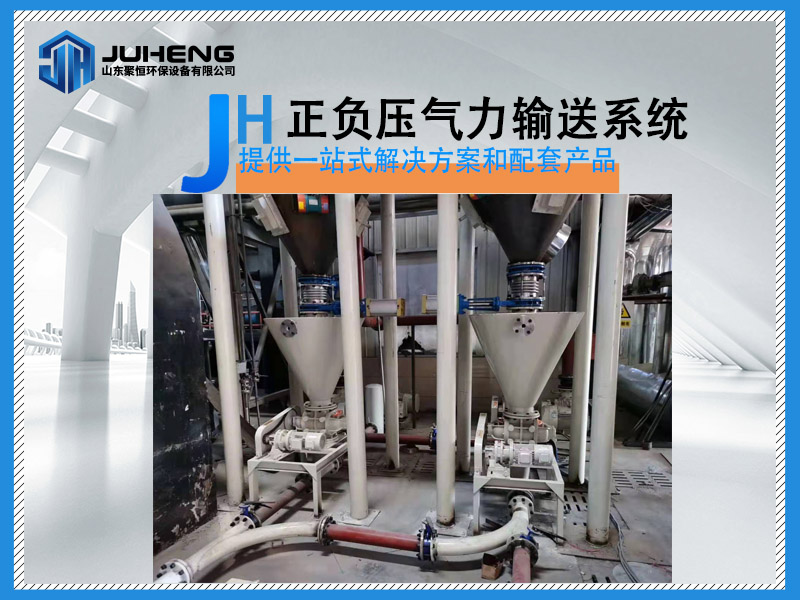
Characteristics and requirements of pneumatic filling:
1) The stacking density of the filling material is 0.8-3t/m ³, with a particle size of 10-50mm and a maximum of 80mm. The amount of fine powder should not exceed 10% -15% of the total amount.
2) The airflow velocity should be selected at 1.2 to 2 times the maximum suspension velocity of the material. Generally, Va=45~60m/s. When the conveying length exceeds 500m, the wind speed increases to 80~100m/s. The general pipeline layout is horizontal and vertical lifting is not allowed.
3) The selection of the diameter of the conveying pipe should be based on the block size and filling capacity. Generally, the diameter is 150-200mm. When the filling capacity is 50m ³/h, the diameter is about 150mm; when the filling capacity is 60-100m ³/h, the diameter is about 175mm; when the filling capacity is 80-120m ³/h, the diameter is about 200mm. Structural and wear-resistant materials, such as curved heads with lining blocks, can ensure the filling of 10000m ³ of stones.
4) Pneumatic filling without unloader, with a guide groove at the end of the clinker pipe, relying on the jet force of the airflow to directly throw the filling material into the filling area.
5) In order to prevent dust from flying in the filling area, a dust extraction fan should be installed, and water should be added to the filling material to maintain a certain humidity, generally with a moisture content (mass fraction) of 2% to 6%, not exceeding 8%.