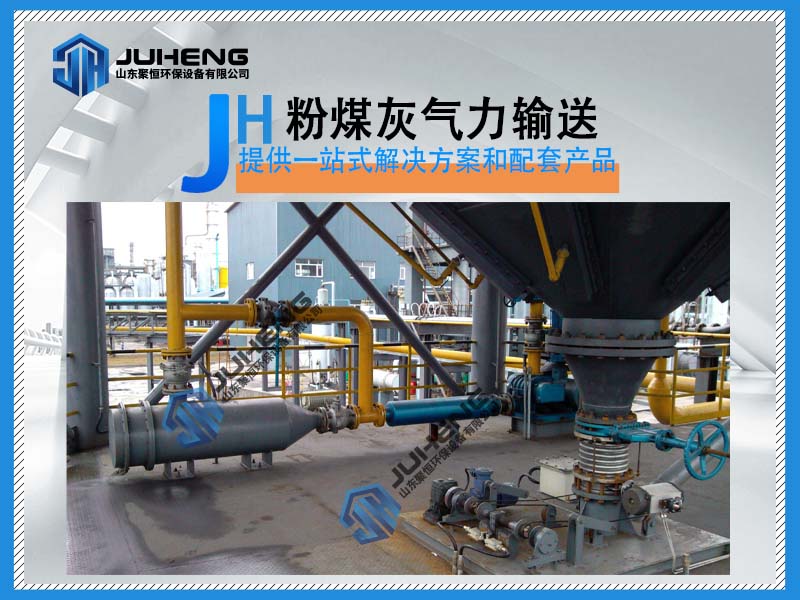
What are the reasons for blockage in the fly ash pneumatic conveying system
We talked about the application of metallurgical industryPneumatic conveying systemAlthough this system has many advantages in conveying fly ash and commonly used conveying types, problems are inevitable during long-term operation. Today, we will learn about the reasons for blockages in fly ash pneumatic conveying systems in the thermal power generation industry:
Firstly, the stability of the air source: as the flow rate of the conveying air decreases, the velocity of the fly ash particles also decreases, resulting in uneven flow and irregular pulsation, causing the fly ash particles to start to stagnate at the bottom of the pipe. At this time, particles near the bottom of the pipe sometimes slide and sometimes stay along the bottom wall of the pipe; And near the tube centerThe particle flow rate should be fast. If the airflow velocity continues to decrease, the upper particles will begin to settle, resulting in critical blockage;
2. There are impurities in the fly ash, such as wooden blocks, stones, etc., hanging in the conveying pipeline, causing blockage;
3. Abnormal increase in local resistance, such as repairing bent pipes after wear through, welding to form internal curled edges and bumps, resulting in increased local resistance and blockage;
4. The gas source equipment is not qualified, the gas source delivery pressure is too low, it cannot overcome the resistance in the entire system or the gas supply is uneven, and the pressure suddenly drops during the delivery process; In addition, the high humidity of the gas source increases the humidity of the fly ash, leading to blockage due to production bonding;
5. Improper pipeline configuration, with multiple horizontal and vertical arrangements, as well as high resistance components such as elbows and branch valve devices, concentrated at the end of the pipeline, resulting in blockage.
6. System air leakage, inadequate sealing of equipment or pipeline interfaces, and midway air leakage caused by worn through bends, resulting in a decrease in conveying speed and blockage;
7. The outlet of the sending device is too small or the outlet resistance is high, causing blockage at the outlet;
8. The curvature radius of branch valves, bends, etc. is too small, resulting in high local resistance and blockage;
9. Misalignment of pipeline joints or rusting and roughness of the inner wall, leading to increased local resistance and blockage;
10. Improper operation or reversed sequence, etc.