
How to solve the vibration of Roots blower
Roots blower asPneumatic conveying systemOr the gas power source of a local system, occupying a central position in the process layout; The laying of pipelines, the matching of accessories, and the selection of other related equipment must all consider the requirements and impacts of Roots blowers. The main causes of vibration during the operation of the Roots blower are:
1) Rotor imbalance;
2) The center of the fan is not aligned with the prime mover or the gearbox;
3) Bearing oil film oscillation;
4) Axis resonance;
5) Internal friction of the fan;
6) Poor lubrication system;
7) Loose rotor;
8) The steel degree of the fan foundation or machine base is insufficient or not firm enough;
9) Poor assembly of fan transmission mechanism;
10) Electromagnetic reasons for electric motors.
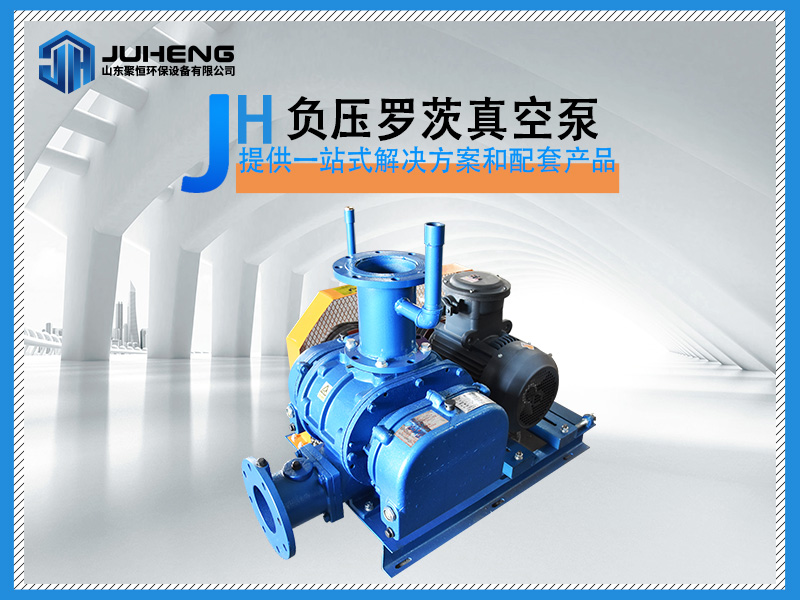
There are three vibration directions for Roots blowers: vertical, horizontal, and axial. Generally speaking, there are many causes of vibration, but during operation, the concentrated reflection is the misalignment of the shaft center or rotor imbalance, with most vibrations occurring in the vertical direction. Vibration is generally measured accurately with a vibration meter, and experienced workers and technicians can also feel the magnitude of the vibration with their hands; When measuring vibrations in three directions, lateral vibrations are also significant. The vibration of Roots blower caused by rotor imbalance, the rotor of Roots blower has undergone static and dynamic balance correction by the manufacturer, and generally should not have its own imbalance. But the following factors can cause rotor imbalance:
1) During the manufacturing process, there may be omissions in the balancing process, inaccurate calibration, inappropriate removal (or addition) of weights during balancing, allowed dynamic unbalance values exceeding the specified value, and loose counterweights. At this point, the position of the balance block should be checked or recalibrated.
2) There is a lot of dirt adhering to the surface of the rotor (such as dust, oil stains, rust, etc.), which damages the balance quality of the rotor. At this point, the dirt on the surface of the rotor should be cleaned.
3) Due to improper manufacturing, transportation, and storage, loose parts on the shaft, loose rivets on the impeller, loose joint surfaces between the shaft disc and shaft, deformation of the main shaft, deformation or damage to the impeller, etc. The handling method should identify the cause, tighten the loose parts, straighten the main shaft or repair the impeller.
4) Incorrect installation of the axial seal causes local friction between the shaft and the sealing ring, resulting in local overheating of the shaft and bending of the shaft. The upper and lower clearances of the sealing ring should be checked in a timely manner, and the bent shaft should be straightened.
5) The load of gas transmission pipelines undergoes a sharp change. At this time, the inlet and outlet valves and their pipelines of the fan should be checked for any dirt blockage and eliminated. If the eccentricity of the rotor is greater than the specified value, centrifugal force will be generated when the rotor rotates, causing significant vibration. The vibration surface caused by rotor imbalance vibrates at the same speed per unit time, and the amplitude at different speeds is proportional to the square of the speed. When the rotor rotates at a certain speed and the frequency of the centrifugal force generated is consistent with the natural frequency of the shaft, the shaft resonates; Resonance is a strong vibration that can cause damage to the rotor and even the entire unit. The rotational speed of the rotor at this time is called the critical speed of the shaft; Therefore, after the fan is started, it should not stay near the critical speed and should pass the critical speed as soon as possible to avoid accidents.
If you still don't know how to solve it, please feel free to consult us.18660786555