
Long distance dense phase pneumatic conveying is suitable for the food industry
InLong distance pneumatic conveyingUnder high-capacity conveying, the most efficient conveying method is the positive pressure dense phase pneumatic conveying system, which is used for conveying various material ingredients. When dealing with fragile and temperature sensitive materials, using positive pressure dense phase pneumatic conveying is more suitable.In terms of hygiene design, dense phase pneumatic conveying systems offer easy to clean and detachable options, making them highly suitable for food applications.
The typical positive pressure concentrated phase conveying system used in the food industry can be divided into concentrated phase conveying, pressure vessel system, concentrated phase conveying, and rotary valve pressure system. The dense phase conveying pressure vessel system adopts high pressure through low-speed pipelines. In the food industry, positive pressure dense phase conveying systems can be divided into dense phase conveying, pressure vessel systems, and rotary valve pressure systems. The dense phase pressure vessel adopts high-pressure and low-speed pipelines. Low speed conveying is particularly suitable for abrasive, fragile, or pre mixed food mixtures. The basic operation involves using gravity to fill a pressure vessel from another container or device. When the pressure vessel is full, the intake and exhaust valves close.
The conveying system is pressurized, and the material flows into the conveying pipeline to reach the selected destination.
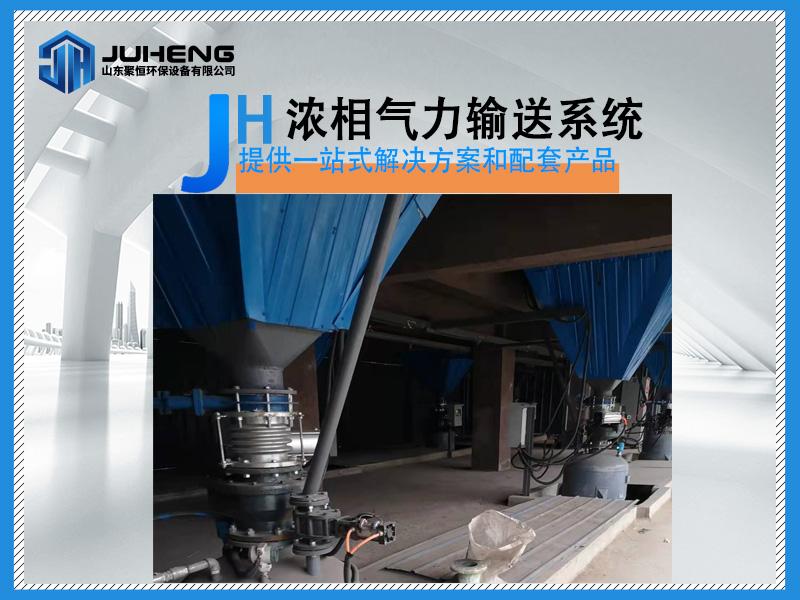
Fixed-point design of dense phase conveying system
In most cases, conveyor lines are equipped with supplemental air (or bypass air) injectors to assist in material flow and minimize material velocity in the conveyor line. The air injection point will break down the conveying distance into several smaller distances, thereby reducing the necessary resistance and pressure for materials to pass through the conveyor line. The resulting slug flow reduces the material area in contact with the inner diameter of the conveying pipeline, thus reducing friction. The reduction of friction in turn leads to reduced wear, degradation, and segregation.