Design of pneumatic conveying elbow
Have you ever done onepneumatic conveyingThe project, but isn't it working as imagined? Perhaps it is an effective method in theory, but it has not achieved the conveying target in practical factory applications. There may be many reasons why the project failed to achieve its goals, but one very simple reason is often overlooked, which is the powder material conveying elbow.
Design of Pneumatic Conveyor Line Elbows
How could a simple component like a powder material conveying elbow have such a significant impact on the system? We found that the powder material conveying elbow looks simple, but if the layout is not correct, it may become a pain point. When it comes to powder material conveying elbows, there are four basic factors that need special attention before system design:
The number of bends, from the starting point to the first powder material conveying bend, the distance between the powder material conveying bends, and the size of the powder material conveying bends. We aim to gain a deeper understanding of the importance of remembering these key points. But what truly ensures that the system design can work exactly as expected is experience. Just because mathematical addition is used does not mean it is also applicable in the real world. That's why the position of the powder material conveying elbow has become a "hidden" or overlooked issue. Without further ado, the following is how elbows in pneumatic conveying systems challenge the design of pipeline components:
The reasonable layout of the conveyor line should consider the position of the bends
If a new conveyor system is put into an existing factory, there are obviously some things to remember. There will be existing walls, piping systems, and process pipelines for design. During the conveying process, it is inevitable to bypass obstacles such as walls. Therefore, elbows on the conveying line are necessary. Increasing the number of elbows will slow down the speed of the material. Therefore, this should be fully considered in the selection of pneumatic conveying and pipeline design. Determining where they can and cannot be placed in pipelines is crucial for the speed of materials and the success of the final system design.
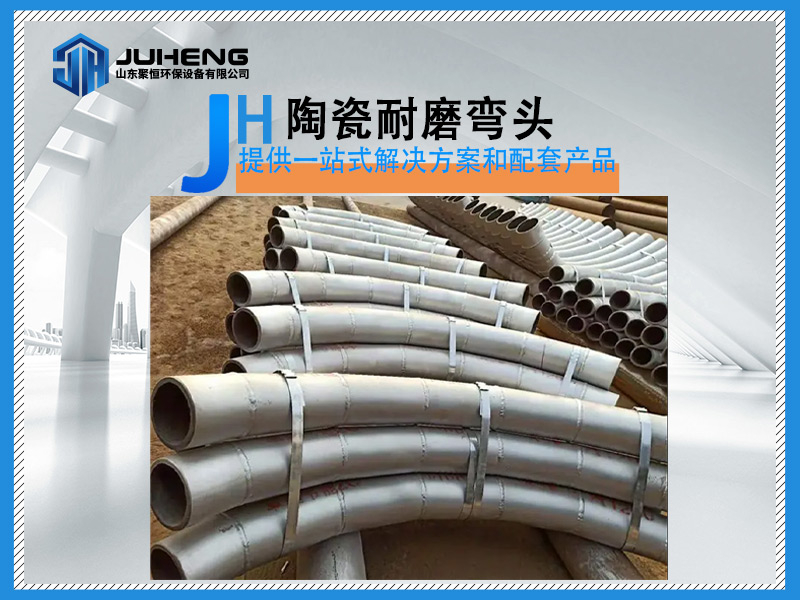
The efficient layout of the conveyor line should consider the arc and radius of the bends. Bends usually come in configurations of 30 degrees, 45 degrees, 75 degrees, and 90 degrees. When a substance flows through a pipeline, it physically impacts the wall of each bend. This causes the material to lose energy and speed. A 45 degree bend (compared to a 90 degree bend) will reduce the impact on the pipe wall, thus reducing energy loss. Another consideration for observing the curvature of the powder material conveying elbow is to observe the radius of the powder material conveying elbow. Both of these are related to the size of the powder material conveying elbow, but the radius of the powder material conveying elbow more specifically indicates the sharpness of the turning inside the powder material conveying elbow. In other words, the elbow joint with a radius of 3 feet rotates faster than the elbow joint with a radius of 6 feet. A smaller radius bend will cause greater impact of the material on the bend wall. This also means that the momentum loss of the material is greater. Just like drivers need to slow down when encountering sharp turns on the road, turning on a bend is more effective in slowing down than turning on a bend with a larger radius. Therefore, in order to maintain the momentum of the material passing through the elbow, the elbow with the largest radius and the smallest arc should be used as much as possible.