
Which is better, dilute phase pneumatic conveying or dense phase pneumatic conveying?
Many production occasions require the arrangement of pneumatic conveying systems, but for manufacturers, they often encounter the question of "which one should be chosen, which one is divided into dilute phase pneumatic conveying and dense phase pneumatic conveying
Before doing this multiple-choice question, we must first understand the essence of pneumatic conveying
Pneumatic conveying, also known as airflow conveying, is the specific application of fluidization technology that utilizes the energy of airflow to transport materials in a closed pipeline along the direction of the airflow. This pneumatic conveying device has the advantages of simple structure and easy operation. Can be used for horizontal, vertical, or inclined conveying. During the transportation process, physical or chemical operations such as material heating, cooling, drying, and airflow classification can also be carried out. But compared to mechanical conveying, it consumes more energy, materials are more easily damaged, and equipment is also more prone to wear and tear. In addition, materials with high moisture content, adhesion, or high static electricity generation during high-speed movement are not suitable for pneumatic conveying.
Pneumatic conveying is divided into two types: dilute phase pneumatic conveying and dense phase pneumatic conveying, which are mainly different from the dense phase pneumatic conveying of materials in pipeline conveying. However, in order to make the right choice, we must first understand the advantages and disadvantages of these two processes, and then consider them in conjunction with our own process specifications.
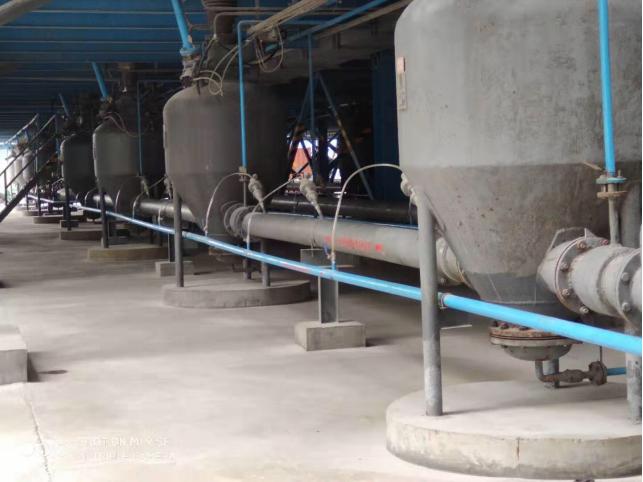
Dilute phase pneumatic conveying
Dilute phase pneumatic conveying generally refers to the suspension of materials in pipelines with a solid content of less than 100kg/m ³ or a solid gas ratio (the mass flow rate ratio of solid phase conveying volume to corresponding gas consumption) of 0.1-25. During the conveying process, it can be used for conveying in horizontal, vertical, or inclined directions. It can also be used together with other machinery and equipment to perform physical and practical operations, such as heating, quenching, drying, and air flow classification, as well as some chemical operations.
The conveying forms of dilute phase pneumatic conveying are divided into pressure (positive pressure) type, suction (negative pressure) type, and mixed type. The main characteristics of positive pressure conveying are high conveying capacity, long conveying distance, and stable actual operation. The main characteristics of negative pressure conveying are the ability to transport from low position (or bulk), multiple points to high position, and single point. Pressure suction can meet special conveying requirements.
Advantage:
From an investment perspective, due to the relatively simple nature of dilute phase systems, the initial investment cost is very economical and easy to maintain compared to dense phase systems.
Disadvantages:
In the process of dilute phase transportation, materials that may cause losses due to high-speed dust generation and crushing have relatively low energy efficiency. The shorter the transportation distance, the smaller the transportation capacity. In addition, the dilution phase used for grinding products can cause wear and tear on the conveying lines and pipelines due to bending.
Dense phase pneumatic conveying
Dense phase pneumatic conveying generally refers to the conveying process with a solid content greater than 100kg/m ³ or a solid gas ratio greater than 25. The operating gas speed is low, that is, a higher air pressure is used to form the gas supply system. There are several different ways of dense phase pneumatic conveying, such as tank conveying and rotary feeding conveying.
The pneumatic conveying of the conveying tank is maintained by filling the tank with the necessary working pressure and selecting the conveying exhaust valve to transport the material (which is in a plunger state in the pipeline). This conveyor has the characteristics of low wind speed, high solid gas, and high conveying pressure. Usually air or nitrogen is used to transport gas, and the power is usually provided by a compressor. The specific feature is low conveying speed, which has little impact on the quality of material products. The dense phase pneumatic conveying of the rotary feeder adopts the dilute phase positive pressure conveying method, and the power is provided by the compressor. The system has high pressure, low flow rate, and large conveying capacity, and has little adverse effect on materials.
Advantage:
Dense phase pneumatic conveying has a large conveying capacity and can perform long-distance compression. Low speed conveying can reduce material and system wear. Due to its slower speed, abrasive products are more suitable for dense phase pneumatic conveying. If designed properly, dense phase pneumatic conveying is generally more energy-efficient than dilute phase.
Disadvantages:
Dense phase pneumatic conveying can only be used when the air supply pressure is high or the conveying distance is short. In addition, in dense phase systems with large diameters and long distances, special pipe supports and additional steel structures may need to be installed to compensate for pipe forces, increasing installation and maintenance costs.
Generally speaking, the choice of conveying method should be considered based on the conveying distance, pressure availability, characteristics of the conveyed material, and its own economic conditions.
It can be summarized as follows:
Almost any material can be transported in dilute phase, but materials with high friction such as abrasive products are more suitable for dense phase transportation;
2. The longer the conveying distance, the more inclined it is to use dilute phase pneumatic conveying;
3. The dilute phase pneumatic conveying system wears out quickly and parts need to be replaced; Although the initial cost of dense phase pneumatic conveying system is relatively high, it is more convenient to maintain.