
What is the difference between a rotary feeder and a sealing pump in pneumatic conveying
A rotary feeder, also known as a star feeder, rotary valve, air lock, etc., is usually composed of a rotor with a number of blades rotating inside a cylindrical casing. The material falls from the upper hopper and is filled in the spaces between the blades. It is transported to the lower part for discharge with the rotation of the blades. The side of the body is equipped with a pressure equalization exhaust port, which can discharge the high-pressure gas brought by the rotation of the impeller, reduce the phenomenon of gas topping, and facilitate the smooth falling of the material. For escort and suction pneumatic conveying systems, the rotary feeder is one of the important components of the pneumatic conveying system. It can evenly and continuously supply a certain amount of material to the conveying pipe, thus completing the transportation of materials. In the separation and dust collection section of the system, it also has the functions of an unloader and an air lock.
Material sealed pumps usually use the injection effect of high-speed airflow to transport materials, and are commonly used in low-pressure dilute phase pneumatic conveying. They are commonly used for medium to short distance conveying of dry and loose powders such as fly ash, alumina powder, and cement powder.
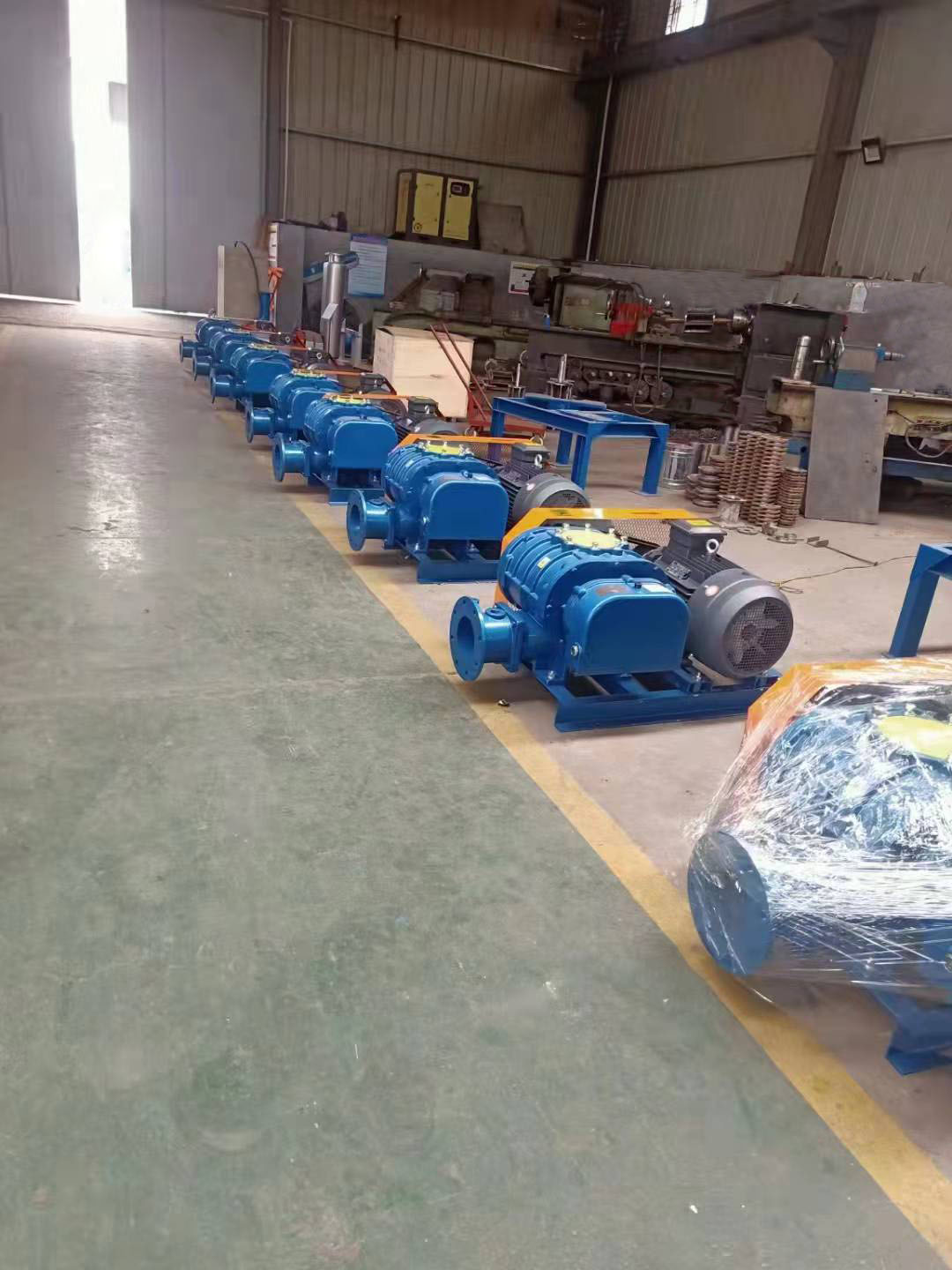
Below, we will compare in detail the differences between pneumatic conveying rotary feeders and material sealing pumps:
1. Transportation method
The rotary feeder relies on an internal motor to transport materials, while the material sealing pump relies on the high-speed airflow to transport materials.
2. Work pressure
Both use Roots blowers for air supply, with a working pressure generally below 0.1Mpa.
3. Working method
Both the rotary feeder and the sealing pump belong to continuous operation, that is, feeding and conveying are carried out simultaneously during the working process.
4. Concentration of pneumatic conveying
The rotary feeder is used for suspended flow dilute phase transportation and will not cause pipeline blockage; The material sealing pump belongs to low-pressure dilute phase transportation, and it is necessary to prevent pipeline blockage caused by concentration increase during transportation.
5. Pneumatic conveying pipeline
The rotary feeder can share multiple feeding ports. However, the material sealing pump usually only has one conveying pipe, and when multiple discharge ports are used, the pipeline layout is more complex.
6. Price
Under the same pneumatic conveying capacity, the rotary feeder has a lower price compared to the material sealing pump. And due to the various advantages of rotary feeders, the industry is gradually inclined to choose rotary feeders as pneumatic conveying equipment.