
What is positive pressure pneumatic conveying? Characteristics and precautions of positive pressure pneumatic conveying system
Positive pressure pneumatic conveying is a conveying method that uses a positive pressure air source to blow at high speed in a pipeline. The commonly used air sources include centrifugal fans, Roots blowers, air compressors, etc. Positive pressure pneumatic conveying is a dynamic pressure conveying method, which is divided into positive pressure dilute phase conveying and positive pressure dense phase conveying. Positive pressure dilute phase conveying systems are typically used to transport bulk materials from one location to one or more destinations, with longer distances and larger capacities than negative pressure systems. The positive pressure pneumatic conveying system uses a blower connected to one or more downstream material inlet points. Each product enters the conveying line through a rotating airlock valve to maintain the pressure difference between the ambient atmosphere and the conveying line. Positive pressure pneumatic conveying materials and air are blown out from the pipeline outlet at single or multiple usage points, separated by filter receivers or cyclone separators, or directly enter the process container and discharged to downstream dust removal equipment. Positive pressure pneumatic conveying systems provide higher efficiency than negative pressure systems, can transport over longer distances, and can be directly blown into process and storage containers without using rotary airlock valves.
In order to simply transport products from point A to point B, positive pressure pneumatic conveying is usually required, and the equipment generally uses blowers, rotary airlocks, cyclone receivers (sometimes airlock valves), and piping systems with elbows and couplings. Usually, the air discharged from the cyclone collector needs to be discharged into a secondary filter, scrubber, or simple atmosphere.
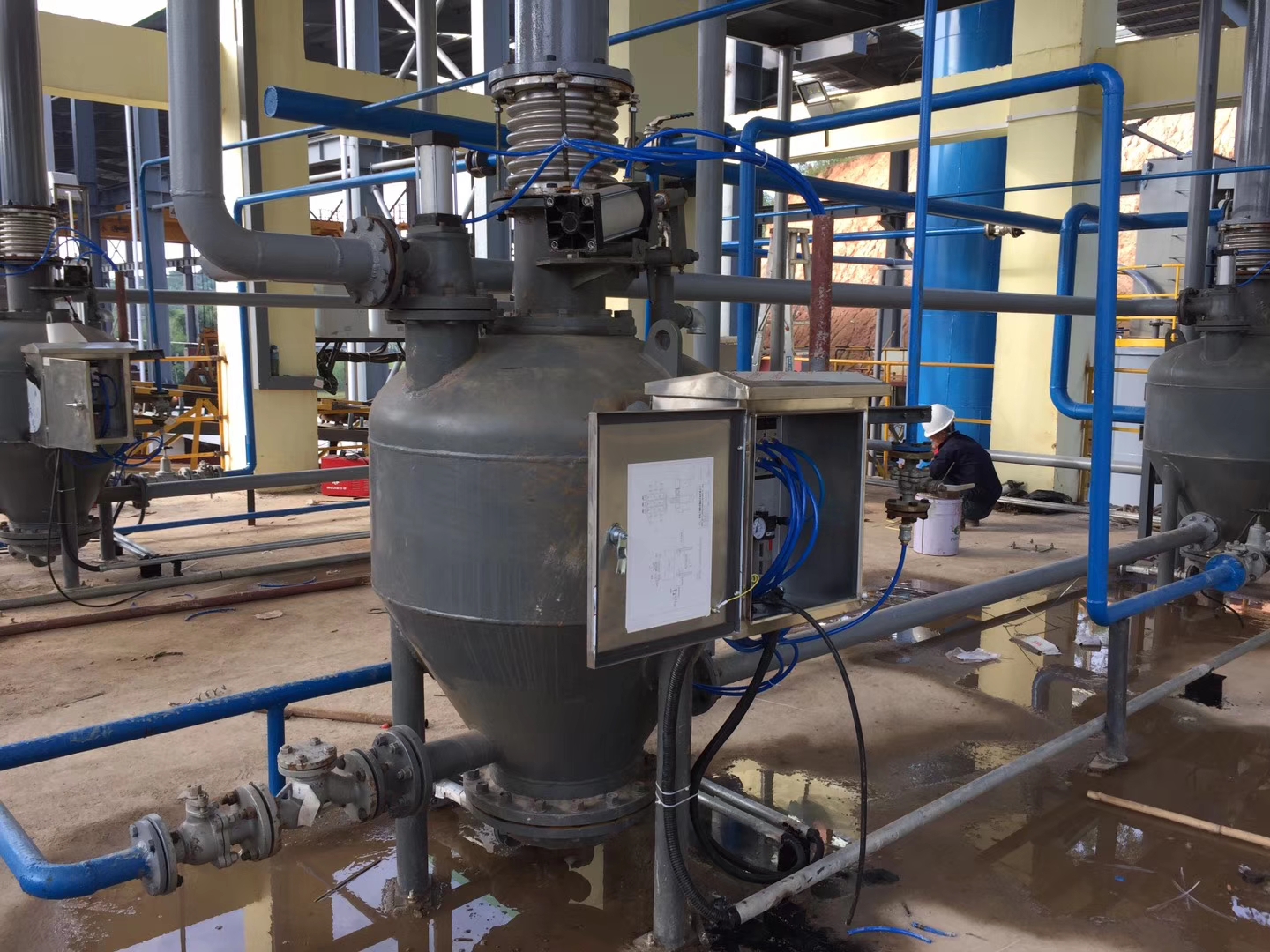
One characteristic of a positive pressure pneumatic conveying system is the ability to add unloading points. Simply add a diversion valve to the conveying pipeline after determining the destination, and unload the goods to the designated destination. Another characteristic of positive pressure pneumatic conveying is that it can be designed as a circulating system through planning, reusing air to connect materials to a second destination, which requires special design.
Although the positive pressure pneumatic conveying system is the most common among all pneumatic conveying systems to transport materials to the receiving point under atmospheric pressure, there may be some issues when conveying materials to pipelines with air under high pressure. There are various types of feeding devices available for use. Due to unfavorable pressure gradients, every type of feeder may leak air and carry dust from the positive pressure pneumatic conveying system.
By using diversion valves, positive pressure systems can easily transport multiple materials to multiple receiving points. Although it is also possible to arrange for multiple points of material to be transported into a regular pipeline, when not in use, due to the presence of high-pressure air in the pipeline, attention must be paid to the possibility of air leakage.