What is the principle of positive and negative pressure suction pneumatic conveying
In the manufacturing industry, the main types of pneumatic conveying are pressure conveying and vacuum conveying. There can also be a combination of two systems, such as Venturi pneumatic conveying. Pressure conveying refers to a system that transports materials from a material supply to a destination through pressurized air. When doing so, the material must be transported to the pressurized material feed line. This requires a special material input. This is usually achieved through the use of rotary gate valves and pressure vessels. Pressure conveying systems are often used for very large conveying volumes, difficult materials, and large distances.
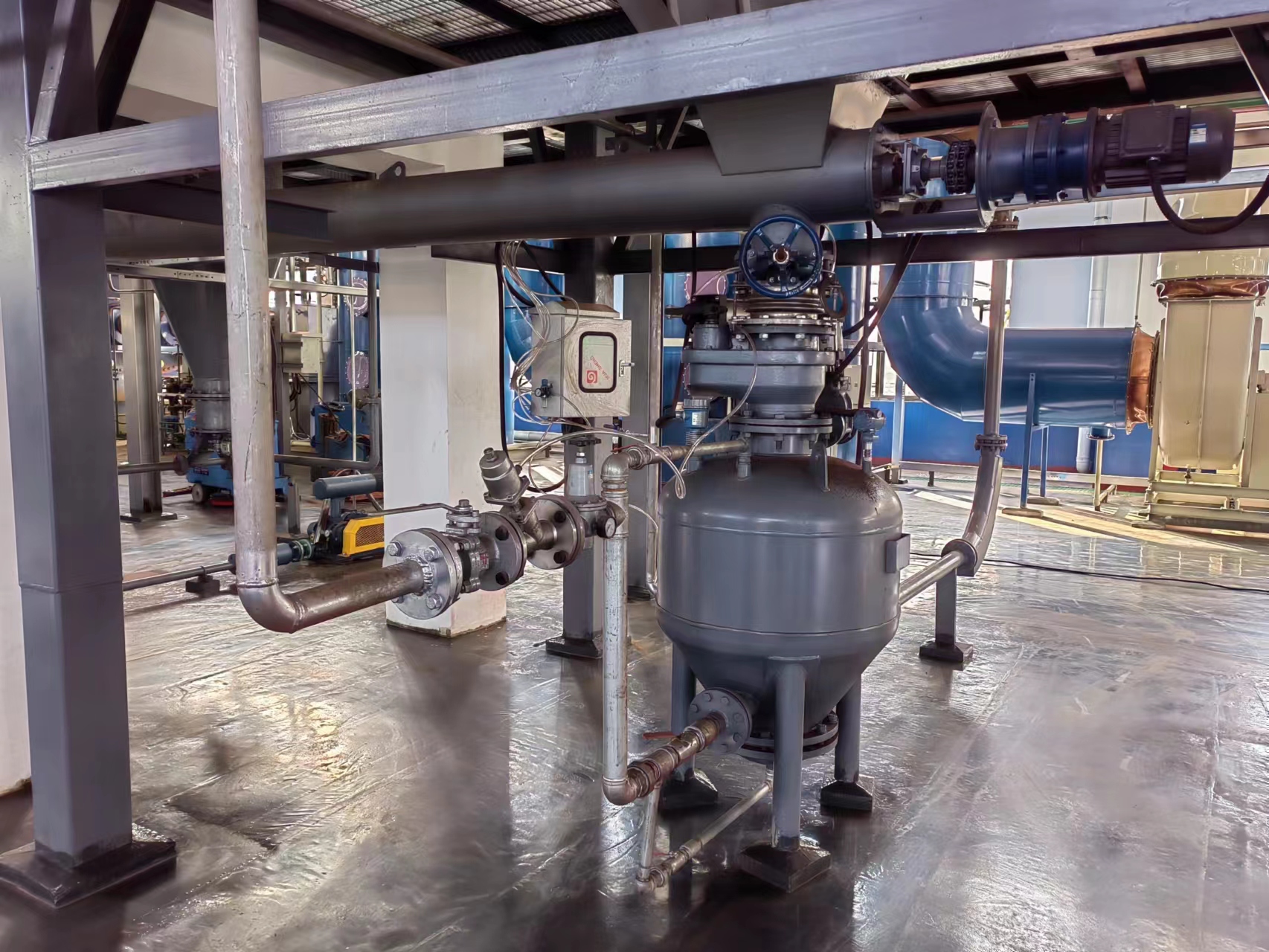
Vacuum conveying, also known as negative pressure suction pneumatic conveying, is the most commonly used conveying principle in the plastic industry. A vacuum pump generates a concentrated or dispersed vacuum. This causes the material to be absorbed and supplied (straws, suction detectors) to the material loader, vacuum air separation material. Vacuum air reaches the vacuum pump through a filter and is released into the environment. Negative pressure suction pneumatic conveying can be used for both individual equipment and complex conveying systems. Due to the flexibility of negative pressure suction pneumatic conveying, it can effectively provide a large number of processing machines and different materials.
The pneumatic conveying system operating according to the Venturi principle has a special state. Negative pressure suction pneumatic conveying is generated with the help of pressurized air and a Venturi valve. This causes the material to be sucked into the Venturi valve and transported to the destination with pressurized air.
Characteristics of positive pressure conveying
Positive pressure conveying, reliable sealing, dust-free environment. The system can run automatically. Low flow rate, high conveying capacity, and minimal impact on material quality. Can be charged and discharged multiple times. There is no material accumulation inside the pipeline. The system has high requirements for the quality of various electrical components and technical personnel.
Characteristics of negative pressure suction pneumatic conveying
Negative pressure suction pneumatic conveying has the characteristics of reliable sealing and dust-free environment. The equipment maintenance requirements are low, making it easy for workers to operate the machine. Can be charged and discharged multiple times. Using centrifugal fans and Roots fans as power sources, it has a long service life. There is no material accumulation in the pipeline, and it has good adaptability to different materials. Powdered and granular materials can be transported smoothly.
Working principle of positive pressure conveying
Positive pressure conveying (recommended): The low-pressure air from the air source enters the pump diffusion chamber after passing through the regulating valve (or pressure reducing valve), butterfly check valve, flexible air pipeline, and spray nozzle. Powder or particles fall from the hopper and are blown off into the high-speed airflow area between the nozzle and diffuser. In addition, with the gasification effect of the bottom gasification device, the material is vaporized into suspension. The material is transported to the conical tube of the diffuser through high-speed airflow. After passing through the throat of the diffuser, it reaches the desired discharge port and enters the conveying pipe. And then this process ends.