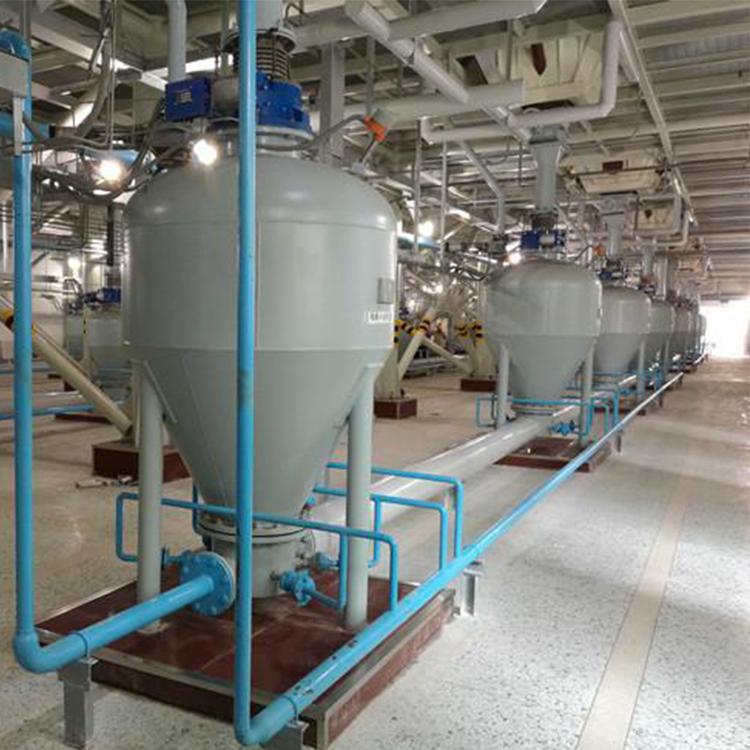
What are the material requirements for pneumatic conveying equipment
The material requirements for pneumatic conveying equipment mainly include the following aspects:
wear resistance:
For materials with strong abrasion resistance (such as sand, ore powder, etc.), it is necessary to choose materials with good wear resistance, such as high chromium cast iron, ceramic lining, or alloy steel.
Carbon steel is also suitable for situations without special requirements, which is economical, but has poor corrosion resistance.
corrosion resistance:
If the conveyed material is corrosive (such as acidic or alkaline materials), corrosion-resistant materials such as stainless steel (such as 304, 316L, etc.) need to be selected.
Lining (such as polytetrafluoroethylene lining) or polymer coating can also be used to improve the corrosion resistance of the equipment.
heat resistance:
Equipment used in high-temperature environments requires the selection of materials that are resistant to high temperatures, such as heat-resistant alloys or ceramics.
anti-static:
For materials that may generate static electricity, it is necessary to choose anti-static materials or carry out anti-static treatment to prevent the risk of static electricity accumulation.
Other special considerations:
Hygiene requirementsThe food, pharmaceutical and other industries have hygiene requirements for equipment materials, usually using stainless steel that meets food grade or medical grade standards (such as 304, 316L).
costOn the premise of meeting performance requirements, try to choose materials with high cost-effectiveness. For example, for general material transportation, carbon steel may be an economical choice, while for high demand applications, stainless steel or special alloys may be more suitable.
Valve material requirements:
Pneumatic conveying valves can be classified into cast iron valves, cast steel valves, stainless steel valves, chromium molybdenum steel valves, chromium molybdenum vanadium steel valves, duplex steel valves, plastic valves, ceramic valves, etc. according to the material of the valve.
It is recommended to use ductile iron as the main material for the valve itself, and stainless steel for the valve stem material.
The hardness of the nut material should be higher than that of the valve stem material, and the hardness of the valve stem bushing material should not be higher than that of the valve stem material. When in contact with water, it should not cause electrochemical corrosion to the valve stem and valve body.
When selecting materials for pneumatic conveying equipment, it is necessary to comprehensively consider factors such as material characteristics, conveying environment, equipment service life, and cost to ensure the performance and service life of the equipment while controlling costs.