
How many aspects should be considered when selecting a gas source for pneumatic conveying?
When choosing the gas source for pneumatic conveying, the following aspects need to be considered to ensure the effectiveness and reliability of the system:
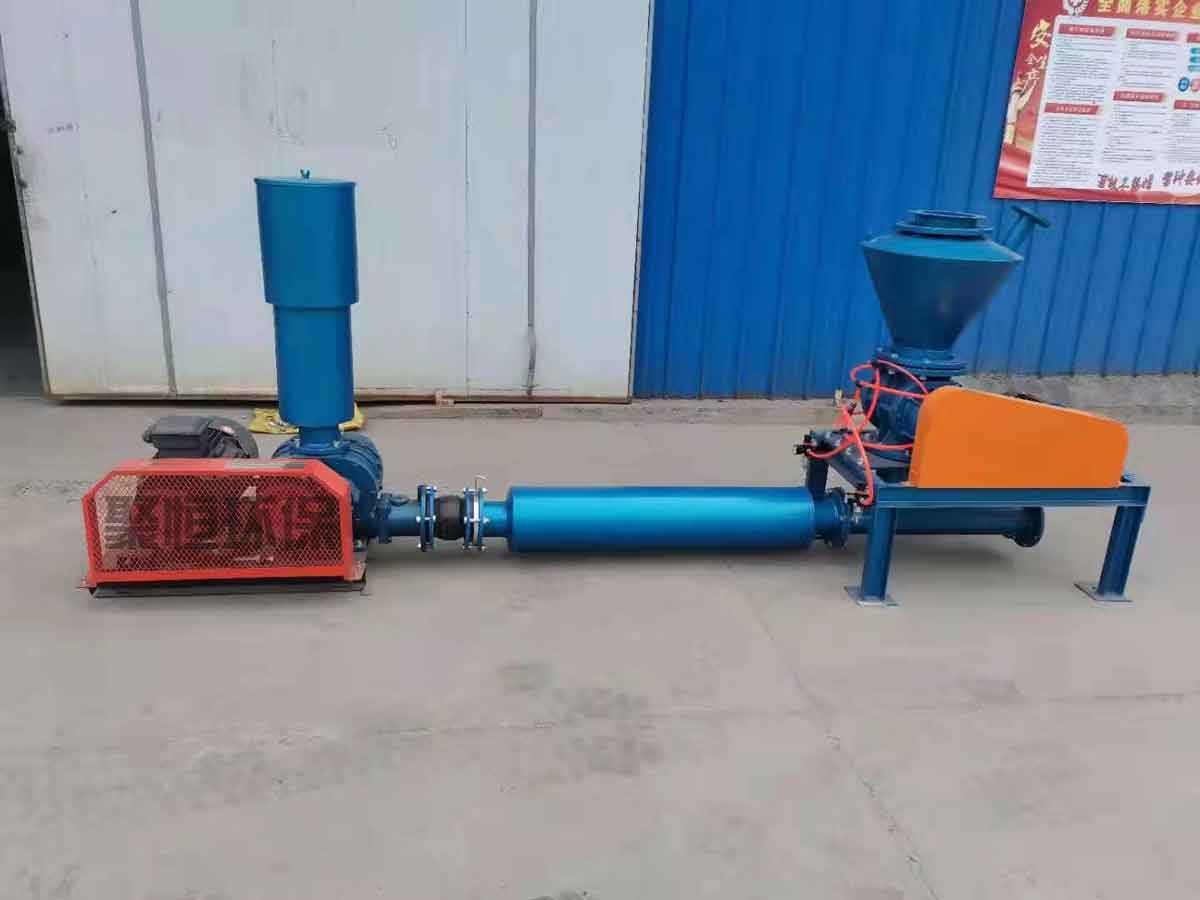
Gas source pressure requirements:
The pressure of the gas source has a significant impact on the delivery efficiency, equipment lifespan, and system safety.
Normally, the pressure range of the pneumatic conveying gas source is between 0.4MPa and 1.0MPa.
The specific pressure value needs to be comprehensively considered based on factors such as the nature of the conveyed material, conveying distance, and system equipment.
Generally speaking, the gas source pressure should be about 10% higher than the normal operating pressure of the system to ensure system safety.
Requirements for dryness of gas source:
In the process of pneumatic conveying, the requirement for air source dryness is very high.
Excessive moisture can lead to unstable conveying speed, obstructed material flow, and equipment damage.
In general, the moisture content in the gas source should be controlled below 5 ‰.
Transportation distance and function:
Determine the gas source based on the conveying distance and function, and refer to the conveying capacity.
If the conveying distance is long, high-pressure air sources such as Roots blowers, Roots vacuum pumps, and air compressors should be selected.
If the conveying distance is close, low-pressure gas sources such as centrifugal fans, Venturi vacuum generators, and annular fans should be selected.
Sensitivity to dust:
The sensitivity of gas source equipment to dust is low to prevent small dust from entering the gas source equipment and causing malfunctions.
Types and properties of conveying media:
Consider the type and properties of the conveying medium used, such as temperature, humidity, corrosiveness, suction pressure, lubrication conditions, etc.
Installation site and environmental conditions:
Consider the load-bearing capacity, area, height limitations, surrounding temperature, and installation conditions of the installation site.
Operation management control and monitoring:
Consider the operation management control and monitoring methods of the system, such as automatic control, remote control, on-site control, etc.
Environmental and noise requirements:
Comply with environmental requirements and noise limitations, and use equipment such as air filters and oil-water separators to eliminate oil, moisture, and dust in the air as much as possible.
Durable and reliable operation:
Choose durable and reliable gas source equipment to ensure the long-term stable operation of the system.
Material Characteristics:
Consider the physical properties of the material, such as particle size, density, viscosity, etc., and select appropriate parameters such as conveying pipe diameter, wind speed, and gas flow rate.
When selecting a gas source, it is necessary to comprehensively consider the above aspects to ensure the stability and efficiency of the pneumatic conveying system. At the same time, it is recommended that the selection be made by professionals to ensure that the system meets actual needs and has good operational performance.