
What is the function of pneumatic conveying
The main function of pneumatic conveying is to transport granular materials along the direction of airflow in a closed pipeline by utilizing the energy of the airflow. Its role is mainly reflected in the following aspects:
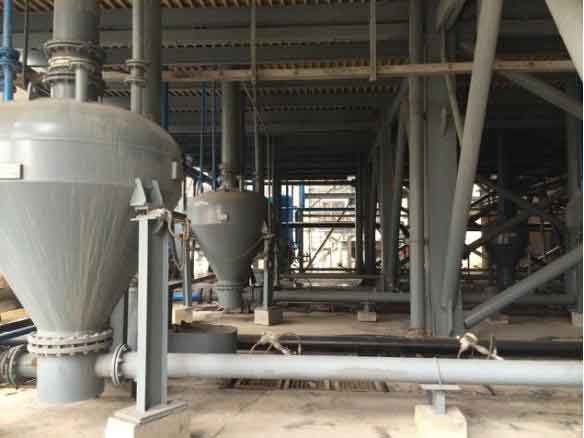
Material transportationPneumatic conveying systems can effectively transport materials such as powders, particles, and fragments from one place to another without the need for manual operation or complex mechanical conveying equipment. This greatly improves the efficiency and convenience of material transportation.
Reduce environmental pollutionDue to the fact that the pneumatic conveying system is carried out in a closed pipeline, it can reduce the dust and dust generated during the conveying process of materials, thereby reducing environmental pollution. This is particularly important for industries with strict environmental requirements.
Protecting material qualityDuring the pneumatic conveying process, the material is wrapped by airflow and transported along the pipeline, avoiding direct contact between the material and the pipeline wall, reducing the possibility of material damage or contamination, and ensuring the quality of the material.
Improve production efficiencyThe pneumatic conveying system can continuously and automatically transport materials, reducing manual operation and downtime, thereby improving production efficiency.
save spacePneumatic conveying pipelines can be flexibly arranged in the factory building without occupying a large amount of ground space, which is conducive to the reasonable layout and space utilization of the factory.
AdaptableThe pneumatic conveying system can adapt to the conveying needs of different types and properties of materials, including fragile, moisture prone, flammable and other materials, and has a wide range of applicability.
Realize remote control and automationModern pneumatic conveying systems can be combined with computer control systems to achieve remote control and automated operation, further improving the flexibility and reliability of the system.
In short, pneumatic conveying, as an efficient, environmentally friendly, and energy-saving material conveying method, is playing an increasingly important role in modern industrial production.