
How to transport corrosive materials by pneumatic conveying
Transporting corrosive materials in pneumatic conveying requires a series of special measures to ensure the safety, efficiency, and stability of the conveying process. Here are some key steps and precautions:
1、 Choose appropriate conveying equipment and materials
Corrosion resistant materials: Key components such as conveying pipelines, valves, pumps, etc. should be made of corrosion-resistant materials, such as stainless steel (such as 304, 316, 316L, etc.), fluoroplastics (such as PTFE), enamel, etc. These materials can effectively resist the erosion of corrosive materials and extend the service life of equipment.
Sealing performance: Ensure good sealing performance of the conveying system to prevent corrosive material leakage from causing harm to the environment and personnel.
2、 Optimize conveying parameters
Airflow velocity: Adjust the appropriate airflow velocity based on the characteristics of corrosive materials. Excessive airflow velocity may exacerbate material erosion and wear on pipelines, while low airflow velocity may lead to material deposition and wall sticking.
Temperature control: For corrosive materials that are easily affected by heat, the temperature during transportation should be controlled to avoid material deterioration or increased corrosiveness due to overheating.
Humidity regulation: For corrosive materials that are prone to moisture absorption, the humidity of the conveying environment should be controlled to prevent the material from increasing viscosity and corrosiveness after moisture absorption.
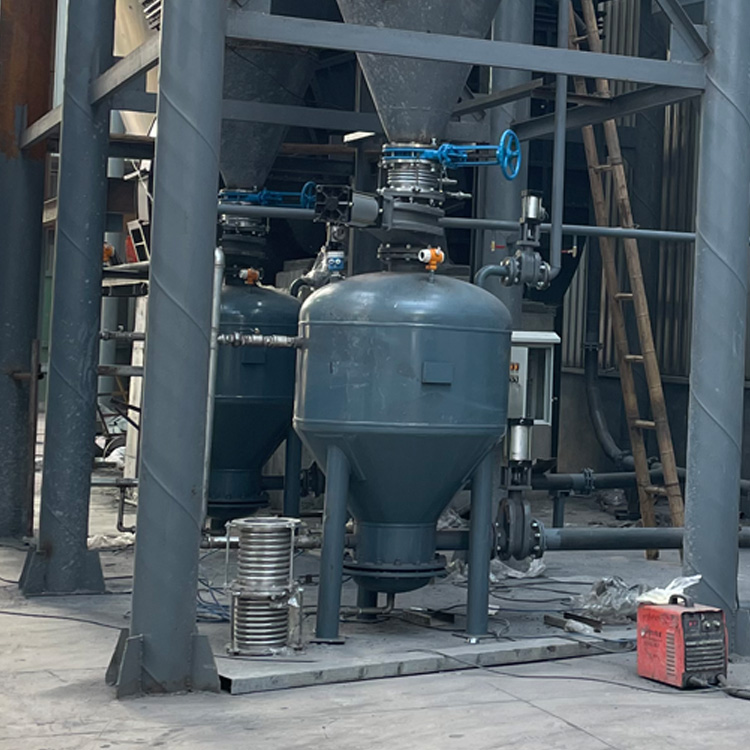
3、 Strengthen safety protection measures
Personnel protection: Operators should wear specialized protective clothing, gloves, face shields, and other protective equipment to reduce direct contact with corrosive materials.
Emergency response to leakage: Develop a detailed emergency response plan for leakage, including measures such as rapid cutting off of the leakage source, collection and disposal of leaked materials, and emergency evacuation of personnel.
Environmental monitoring: Real time monitoring of environmental parameters such as temperature, humidity, and concentration of corrosive gases during transportation to ensure environmental safety.
4、 Regular maintenance and inspection
Equipment maintenance: Regularly maintain and upkeep the conveying equipment, inspect the wear and corrosion of pipelines, valves, pumps, and other components, and promptly replace damaged parts.
Cleaning work: Regularly clean the interior of conveying pipelines and equipment to prevent the residue and accumulation of corrosive materials.
Safety training: Provide safety training to operators to enhance their understanding of corrosive materials and emergency response capabilities.
5、 Choose the appropriate conveying method
Dilute phase transportation: For materials with weak corrosiveness and large particles, dilute phase transportation can be used. This method has a high airflow velocity, and the material is suspended in the pipeline, reducing the contact time with the pipe wall and lowering the risk of corrosion.
Dense phase transportation: For materials with strong corrosiveness and small particles, dense phase transportation can be used. This method has a lower airflow velocity, causing the material to become stuck in the pipeline, reducing the direct contact area between the material and the airflow and lowering the corrosion rate.