
Four precautions in the design of dense phase pulse pneumatic conveying
The four precautions in the design of dense phase pulse pneumatic conveying mainly include the following aspects:
1. Suitability of materials
Breathability and gas storage capacityDense phase pneumatic conveying requires materials to have certain breathability and gas storage properties, which are important conditions for forming a stable material column. Materials with good breathability can better mix with airflow during transportation, forming a stable conveying state.
stickinessThe material needs to have a certain degree of viscosity, which helps to form a column, but excessive viscosity can easily cause blockage. Therefore, when selecting materials, it is necessary to comprehensively consider their viscosity characteristics.
Particle size and shapeMaterials with particles larger than 1mm and uniform particle size are easy to transport, while powders that are too fine are not suitable for dense phase pneumatic conveying due to their strong cohesiveness. In addition, the internal friction angle of the material should be greater than the wall friction angle to avoid adhesion to the inner wall of the pipeline.
-
Material properties and their impact after transportationSome materials, such as insulation materials, have reduced insulation performance after compression. Although pulse pneumatic conveying can be used, its performance is damaged after conveying, so it is not suitable for use.
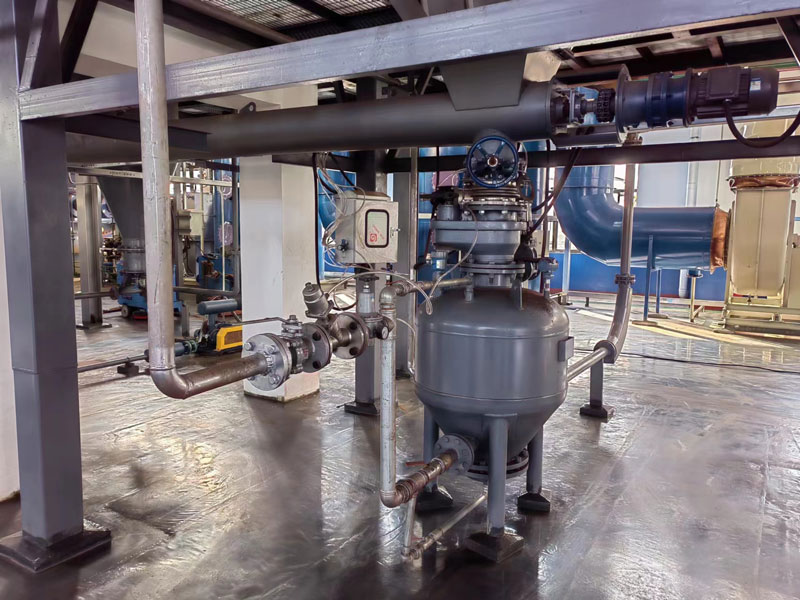
2. Pipeline design for transportation
Pipe diameter selectionThe diameter of the conveying pipe should not be too large, generally not exceeding 100mm, and the commonly used diameter is 38-75mm. An excessively large pipe diameter is not conducive to forming a stable column, especially for loose powder materials.
Requirements for the inner wall of pipelinesThe inner wall of the pipeline should be smooth, without protrusions, and have a low friction coefficient to reduce resistance during material transportation. Thin walled seamless steel pipes are generally used to meet these requirements.
Pipeline layoutIt is best to use inclined and horizontal pipeline layout to avoid blockage caused by the merging of material columns in vertical pipelines. If the layout space allows, it is better to have fewer bends, and the curvature radius of the bends should not be too small (at least R/D=5~10). The two bends should not be too close to each other to ensure smooth movement of the column.
3. Transportation process control
Gas column ratio and column lengthThe longer the material column is compared to the gas column, the higher the mixing ratio, and the lower the gas consumption. However, if the material column is too long, it will increase the risk of blockage. Therefore, it is necessary to determine the appropriate gas column ratio and column length based on the properties of the material and the specific situation of the device.
Conveying pressureAfter the conveying distance increases to a certain extent, the conveying pressure needs to be increased. However, excessive conveying pressure is not conducive to the formation of the material column, so it may be necessary to use an intermediate air supply method to maintain conveying efficiency.
4. Safety and stability
prevent cloggingDuring the design process, measures to prevent blockage should be fully considered, such as selecting appropriate materials, controlling pipe diameter and bending radius.
Equipment selection and maintenanceSelect appropriate conveying equipment and accessories, such as air knives, pulse valves, etc., and regularly maintain and inspect them to ensure the stable operation of the system.
Emergency Response PlanDevelop emergency plans to deal with possible malfunctions and accidents, including handling methods for blockages, leaks, and other situations.
In summary, the design of dense phase pulse pneumatic conveying requires comprehensive consideration of material suitability, conveying pipeline design, conveying process control, safety and stability, and other aspects to ensure the efficient and stable operation of the system.