
Selection of pneumatic conveying system
For enterprises, choosing a suitable pneumatic conveying system is very important. If choosing an unprofessional pneumatic conveying manufacturer, it may lead to blockage, air leakage, powder running and other phenomena in the pneumatic conveying system, seriously affecting the service life of Roots blowers and feeders. Let Shandong Juheng introduce what factors should be considered in pneumatic conveying?
1. Consider the factors of pneumatic conveying materials
The size and shape of the material have a significant impact on the conveying stage, as it determines the fluidity and how much air is required to move the material. This refers to the shape of each particle. Bulk density is the material in its bulk form, which helps determine the design of pneumatic systems and the content required to move bulk from one place to another. Moisture content can affect fluidity, and poor humidity calculation can easily cause blockage, which is an important consideration when designing pneumatic systems. Moisture can cause blockages in material bonding pipelines. Fragility refers to the ease with which a material can be crushed. Many materials break when they come into contact with the surface of pipelines or collide with bends. If you are concerned about this, you should use lower speeds to reduce particle breakage, deformation, and adhesion, which means that materials will adhere to each other under pressure, causing problems in the conveying pipeline. Another important factor is the grinding type. If the material has too much grindability and the selected pipe material is not suitable, it may cause severe wear and even damage to the pipeline. The pneumatic conveying system has malfunctioned. Moisture absorption is the ability of a material to easily absorb moisture from the air. These materials can be coated on the walls of the conveyor line and cause blockages. Using dry air can help reduce moisture in pipelines.
2. Three common pneumatic conveying methods
After determining the type of material to be transported, it is necessary to consider the three basic categories of transportation. Understanding this stage will help determine how to choose a pneumatic conveying system for dense phase pneumatic conveying: the system used for dense phase pneumatic conveying is a low-speed conveying system. The material will not be suspended in the airflow, so there is not much wear on the material and the pneumatic conveying system itself. If it is a fragile material, this type of system needs to be selected because its low speed can reduce damage to particles. Even slightly hygroscopic materials do not require the use of air drying equipment. Semi dense phase pneumatic conveying: When only a portion of the material is suspended in the air flow for conveying, we generally refer to it as a semi dense phase pneumatic conveying system. The semi dense phase pneumatic conveying system is suitable for products that are in a ventilated state, such as cement or fly ash. Semidense phase pneumatic conveying systems are not suitable for larger particles, longer conveying distances, or materials with high humidity, as they are prone to clogging in pipelines. Dilute phase pneumatic conveying: Dilute phase pneumatic conveying is a high-speed system characterized by the continuous suspension of materials in the airflow. The material will not accumulate at the bottom of the conveying pipeline in any position. It is best used for non abrasive, non fragile materials with low density, such as flour or corn starch. Larger materials require higher airflow to maintain particle suspension, and due to the fast speed of dilute phase pneumatic conveying and friction with pipeline walls and bends, it is almost impossible for the material to maintain high integrity. But if you don't care about the integrity of the materials, you can ignore it.
3. Special attention points
After selecting a pneumatic conveying system, it is also important to pay attention to several other points. Grounding the conveying lines and system equipment can reduce the transmission of static electricity, as well as materials that are prone to react with pipelines or air, resulting in the production of substandard products. Finally, some materials may pose a risk of dust explosion when exposed to air, and inert gases need to be used instead of air.
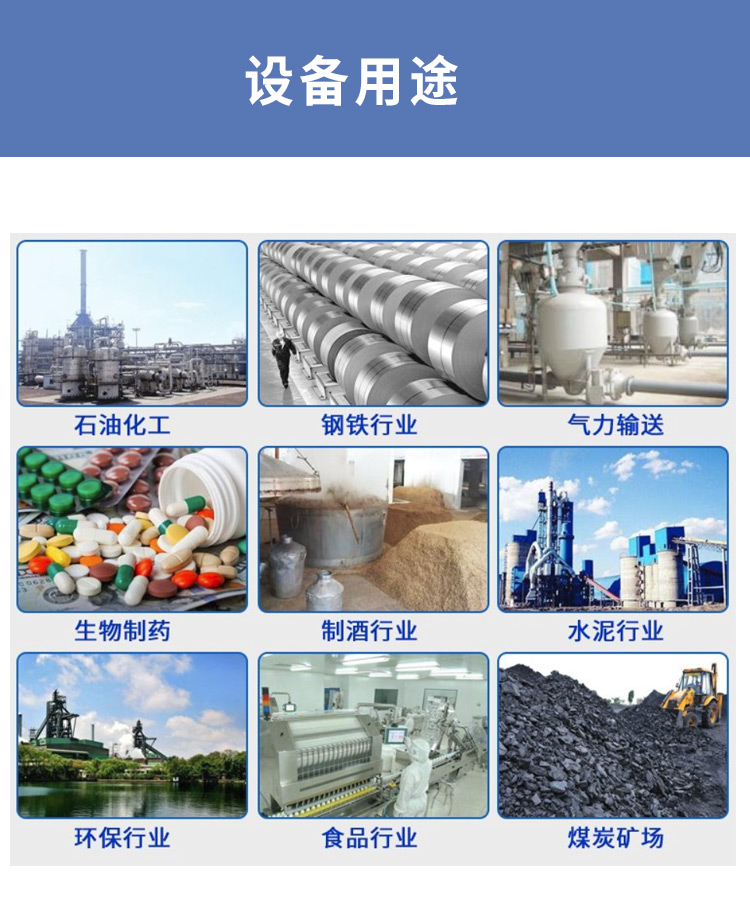
Pneumatic conveying systems can be used in industries such as petroleum, chemical, power, pharmaceuticals, ports, docks, pharmaceuticals, metallurgy, mining, steel, warehouses, ships, factories, powder engineering, building materials, environmental protection, scientific research, transportation, logistics, postal services, food, grain, feed processing, aquaculture, desulfurization and nitric acid. If you need pneumatic conveying equipment, please feel free to consult