
There are several general forms of pneumatic conveying equipment
In the case of powdered and granular materials, using a pneumatic conveying system can not only achieve high efficiency in conveying, but also prevent external humidity and impurities in the air from contaminating the materials. Using inert pneumatic conveying can also ensure safe transportation of flammable and explosive materials. itsPneumatic conveying systemThe working principle of the pneumatic conveying device is to use the kinetic energy of the airflow to make granular materials suspended, bolted or in a continuous sand dune shape, and transport them along the pipeline with the airflow. The pneumatic conveying device is divided into three types according to pressure: suction type, pressure type and mixed type.
1、 Suction type
As shown in Figure 1:
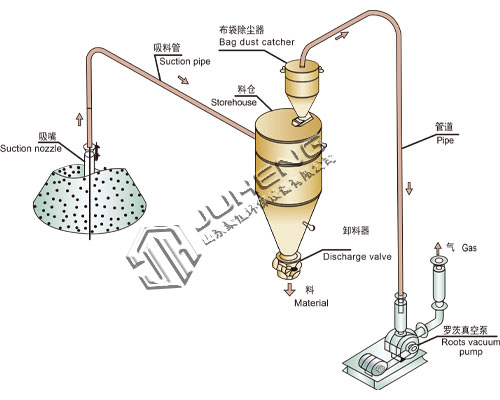
Figure 1
The exhaust fan and the entire pneumatic conveying system exhibit a certain degree of vacuum. Under the action of air pressure difference, the airflow causes the material to enter the suction nozzle and be sent along the conveying pipe to the separator at the discharge point. After separating the material from the air, it is discharged from the bottom of the separator. The airflow is purified by a dust collector and discharged into the atmosphere through a muffler. The advantage of suction feeding is that it is simple to feed and can suction materials from multiple places at the same time, but the conveying distance is less than positive pressure, resulting in low productivity.
2、 Pressure delivery type
As shown in Figure 2:
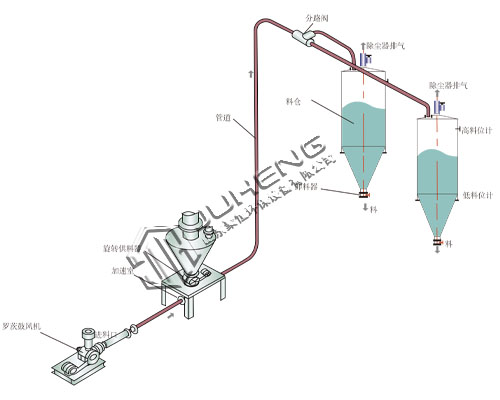
Figure 2
The blower compresses the air into the conveying pipe, and the material is fed from the pneumatic conveying system feeder. The mixture of air and material is compressed along the conveying pipe of the pneumatic conveying system to the discharge point. The material is discharged after passing through the separator, and the air is purified by the dust collector and discharged into the atmosphere. The characteristics of the pressure feeding type of pneumatic conveying system are opposite to those of the suction type. It can simultaneously transport materials to multiple places, with a relatively long conveying distance and high productivity. It also requires high sealing requirements for equipment and pipelines along the way.
3、 Mixed type
As shown in Figure 3:
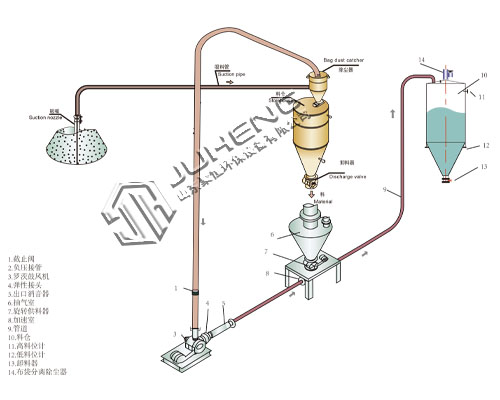
Figure 3
As the name suggests, hybrid power is a combination of the two forms mentioned above. Compared with mechanical continuous conveying devices, mixed pneumatic conveying materials are conveyed under fully enclosed conditions and are almost unaffected by climate and environment. The pneumatic conveying system can ensure that materials are not affected by moisture, dirt, and debris, and can effectively improve the working conditions of on-site workers and the factory environment. The hybrid pneumatic conveying system has the advantages of simple equipment, simple structure, small footprint, flexible layout, and low equipment cost. The pneumatic conveying system can simultaneously carry out processes such as crushing, drying, and grading, which facilitates centralized control by enterprises, realizes material transportation automation, and improves the transportation strength of enterprises.
Shandong Juheng Environmental ProtectionA pneumatic conveying system can be designed based on the characteristics of the conveyed materials provided by the customer, such as particle size, specific gravity, etc., including conveying distance, climbing height, on-site conditions, production capacity, conveying mode (intermittent or continuous), and suitable equipment can be selected. If you need pneumatic conveying equipment, please feel free to call us.