
What are the reasons for pipeline blockage in pneumatic conveying
If there are problems in the design of pipelines and the selection of fans, it is easy to cause blockages in pneumatic conveying. So I suggest everyone choosePowerful manufacturersChoose and design pneumatic conveying solutions. How is blockage formed? There are many reasons for blockage in pneumatic conveying pipelines, including preliminary design layout, insufficient analysis of material properties, quality problems in pipelines, and changes in gas source parameters. Below are five modules that will provide a detailed understanding of how blockages in pneumatic conveying systems are caused.
The first type is that the pipeline design and design parameters are not reasonable enough, such as too many bends, excessive mixing of material and gas, low designed airflow, and small curvature radius, which can easily cause blockage in pneumatic conveying. In dense phase pneumatic conveying, the length of the plug like material is too long, which can also easily cause blockage.
The second type is insufficient analysis of the characteristics of the transported materials; Some materials have stickiness or may adhere to the pipe wall when exposed to moisture, especially at the bends of the pipeline, resulting in a narrow interior and increased resistance, ultimately leading to blockage. Some materials can also generate static electricity after friction, which leads to adsorption and agglomeration. The faster the conveying speed, the more serious the situation becomes; In addition, mixing cotton and wood into the material can also easily cause blockages.
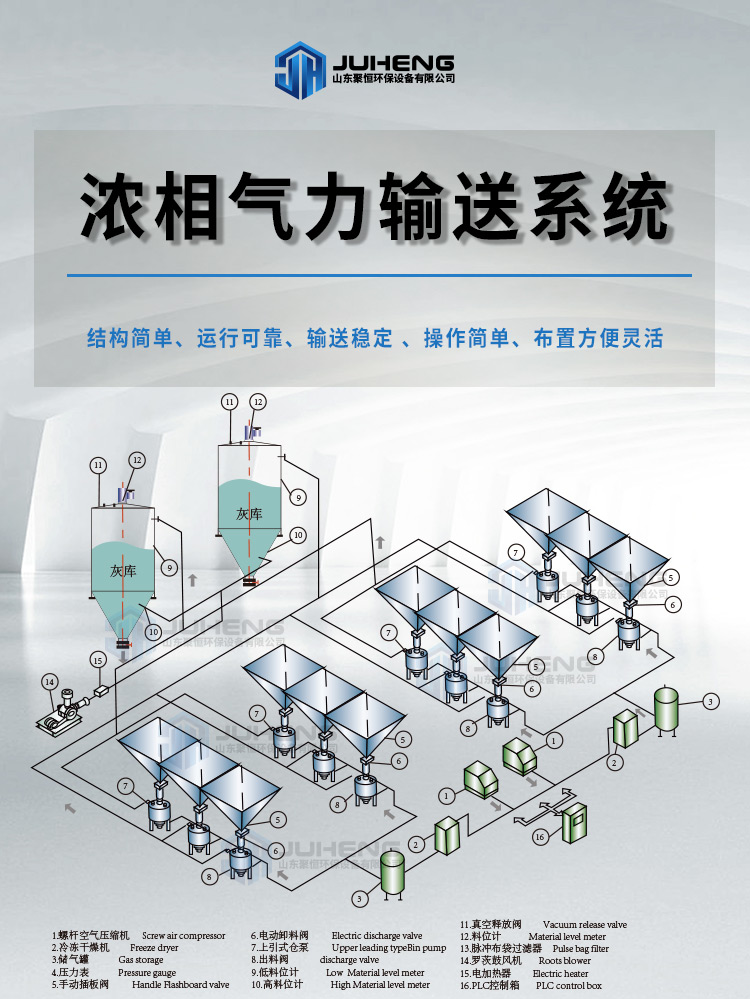
The third type is the quality problem of pipelines. Choosing inferior pipelines will result in rust and roughness inside. When transporting materials, the materials will adhere to them, causing the pipeline to be narrow and blocked. There are also pipeline joints that are misaligned, which can also cause blockage. Pipeline leakage can lead to a decrease in airflow and blockage.
The fourth issue is the wind source; If the selected conveying fan is not suitable enough, the airflow speed is too low, the mixing ratio increases, and material settling is also hindered. The fan also malfunctioned, causing blockage due to insufficient air volume and pressure. The humidity of the air source was too high, and some materials became stuck due to moisture, resulting in blockage.
The fifth type is operational issues, such as uneven feeding after pneumatic conveying is turned on, or excessive blockage caused by feeding; Operational error: When opening the pneumatic conveying system, the opening sequence was incorrect, and the feeder was opened without opening the formal air source. At this time, the feeder was filled with material or the unloader was not smooth, causing blockage due to slow opening of the air source; The pressure of the turbocharger is too high and the flow rate is too large, which hinders material transportation and causes blockage.
If there is a blockage in the pipeline, the blockage point can be found and resolved based on its principle. If there are still problems, please contact a professional manufacturer to find the problem and solve the blockage in pneumatic conveying. Shandong Juheng Environmental Protection is waiting for your consultation!