
Analyze the working principles of three types of pneumatic conveying methods
According to the pressure state, it can be divided into suction pneumatic conveying device, compression pneumatic conveying device, and hybrid pneumatic conveying device. Below, we will analyze their specific working processes.
Suction type pneumatic conveying device
The suction type pneumatic conveying device uses a Roots blower or negative pressure Roots blower as the air source equipment. The components of the feeding device are mostly suction nozzles, induction type feeders, etc. The most common process layout system is shown in Figure 1. The air source equipment is installed at the end of the system. When the fan rotates, the entire system forms negative pressure, and the air is sucked into the material conveying pipe due to the pressure difference between the inside and outside of the pipeline. At the same time, the material and a portion of the air are simultaneously sucked into the nozzle and transported to the separator. In the separator, the material is separated from the air. The separated material is discharged from the rotary unloader at the bottom of the separator, while the unseparated fine powder particles are purified by the airflow into the dust collector. The purified air is discharged into the atmosphere through the muffler configured in the system.
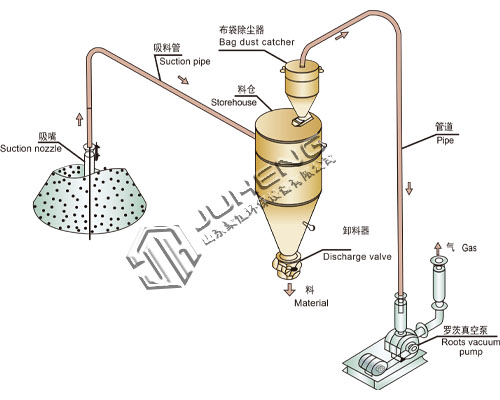
Figure 1
Pressure fed pneumatic conveying device
There are various types of pneumatic conveying devices, including low-pressure pneumatic conveying devices, high-pressure pneumatic conveying devices, fluidized pressure pneumatic conveying devices, and pulse plug flow pneumatic conveying devices. Regardless of the type of device mentioned above, the gas source equipment is located at the feeding end of the system. Due to the gas source being located at the front end of the system, materials cannot be freely and smoothly fed into the conveying pipe, and a sealed feeding device must be used. Therefore, the feeding components of this device system are more complex than those of the suction type. After the conveyed material is compressed and delivered to the conveying destination, it is separated in the separator or storage bin and discharged through the unloading device. The compressed air is purified by the dust collector and discharged into the atmosphere. Figure 2 shows a typical system of a low-pressure pneumatic conveying device.
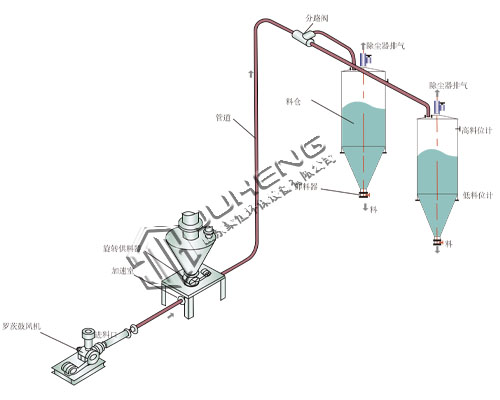
Figure 2
Hybrid pneumatic conveying device
The combination of suction type pneumatic conveying device and pressure type pneumatic conveying device is called a hybrid pneumatic conveying device. For example, materials are sucked from the suction nozzle into the feeding pipe and sent to the separator. They are then discharged by the lower unloader (which also serves as a feeder for the pressure feeding part) and sent to the pressure feeding feeding pipe. The air from the separator enters the fan through the air duct, and after compression, it enters the feeding pipe to press the materials to the unloading location. The material is discharged through the unloader, while the air is purified by dust removal and discharged into the atmosphere through the air duct muffler. The hybrid pneumatic conveying device combines the characteristics of suction and pressure conveying devices. It can suction and pressure feed from several places to a distant location, but its structure is complex and the working conditions of the air source equipment are poor, which can easily cause wear on the fan blades and housing. As shown in Figure 3
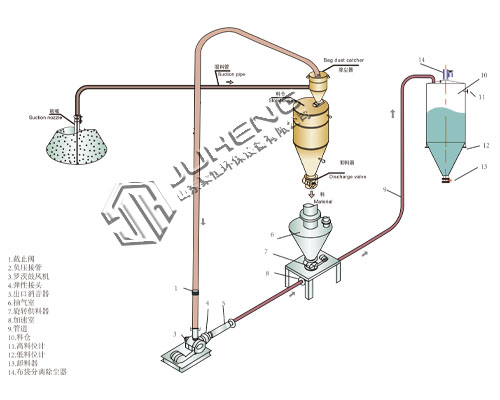
Figure 3
If you are interested inPneumatic conveying systemIf you have any questions, please feel free to contact us. Our professionals will answer them for you.