
Pulse pneumatic conveying operation procedure
Pulse pneumatic conveyingThe device requires an automatic control system or program control system, as the material and gas are sent in intervals. Once the operation is incorrect, material blockage may occur and the conveying may stop. Secondly, when a large conveying volume is required and continuous conveying is adopted, an automatic control program system must be designed. If operated manually, it will inevitably make the operator too nervous and cause misoperation.
The control method of pulse pneumatic conveying is basically similar to dynamic pressure conveying. Here, we first introduce the control system mainly based on relay control.
The pulse pneumatic conveying automatic control device for intermittent sending, as shown in Figure 1, is a system that sends materials to the conveying pipeline intermittently. It consists of a feeding bin, inlet and outlet valves, sending tank, pulse generator, control device, and gas source.
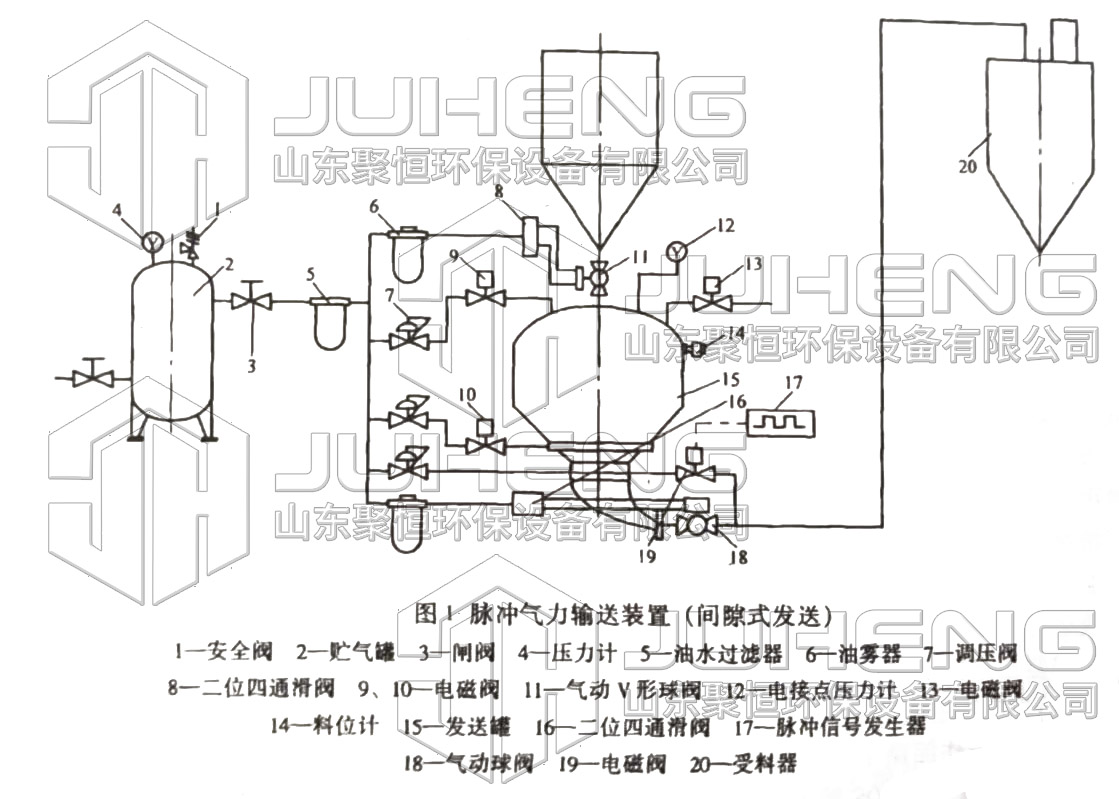
Operation procedure and action: The general operation procedure for pulse pneumatic conveying is: first, add materials, and the necessary condition is to empty the gas in the tank until the pressure gauge indicates zero. The full material signal is indicated by the level gauge (or time), and then the feeding valve, exhaust valve, and waiting material are closed. Before feeding, the pulse generator must be turned on first (for those closer, both the air valve and the air knife valve can be opened at the same time), so that the air knife starts working, allowing the pulse gas to pass into the feeding pipe first, and then opening the discharge valve. When the discharge is completed. When the discharge level is displayed and a signal is issued, or when the pressure gauge indicates the lower limit value, the discharge valve is closed, and then the power supply of the pulse signal sending tank is turned off, then one working cycle ends.