
Application of pneumatic conveying in mechanical and metallurgical industries
The application of mechanical and metallurgical industries in mechanical or metallurgical industries requires timely and rapid analysis of chemical composition for steelmaking or molten iron melting. Generally, manual transfer takes an average of 4-8 minutes, accounting for 40% to 60% of the entire sample analysis time, which affects the testing cycle. Container type pneumatic conveying can shorten the time by more than 90% compared to manual transfer.
The pneumatic conveying of the above departments often uses single tube and multi tube pressure conveying devices with bidirectional conveying. According to the number of melting equipment, multiple furnaces can be connected to a laboratory's pneumatic conveying device.
Figure 1 shows a container type pneumatic sampling scheme for transporting pig iron and slag samples from a blast furnace workshop to a laboratory. The sending station and receiving station are connected by a conveyor pipe. In the workshop of multiple melting furnaces, the sending station should be arranged in the middle position of the iron tapping point of the two furnaces. The pneumatic conveying device route length of the two furnaces closest to the laboratory is 150m, with a conveying pipeline wall thickness of 6mm and a seamless steel pipe diameter of 89mm. The compressed air pressure is 2200~400kPa, the average conveying speed of the sample container is 15~20m/s, the length of the container is 150mm, and the maximum diameter is 744mm. The entire system is controlled by photoelectric control.
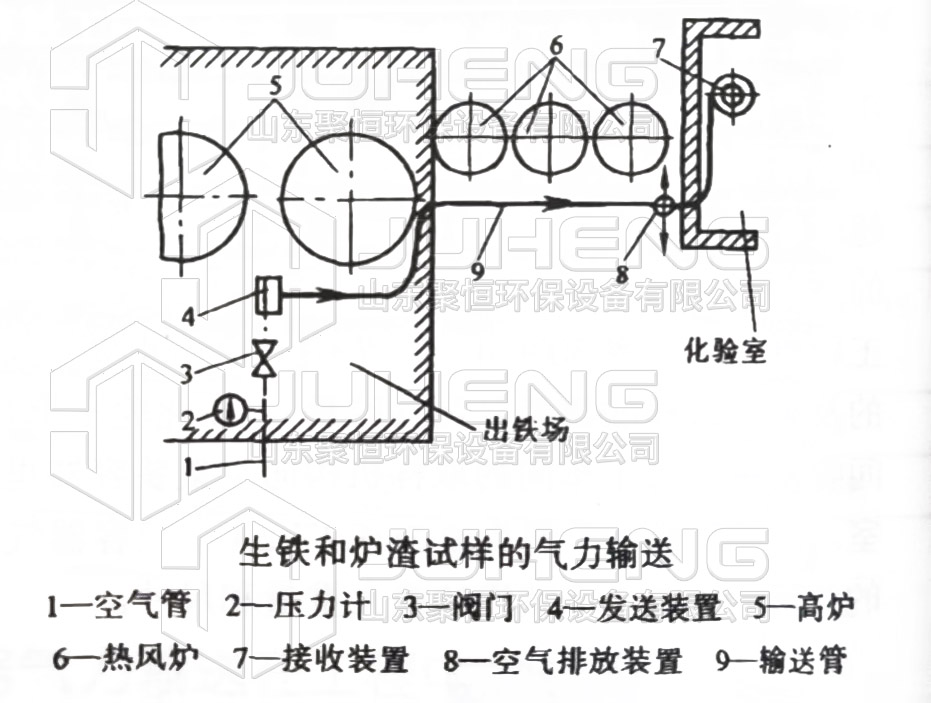
The same device is used to transport samples from the open hearth workshop of a certain steel plant to the laboratory. Its main technical parameters are: pipeline length of 300m, conveying pipe diameter of 76mm, compressed air pressure of 12kPa, and average conveying speed of the container of 10-12 m/s.
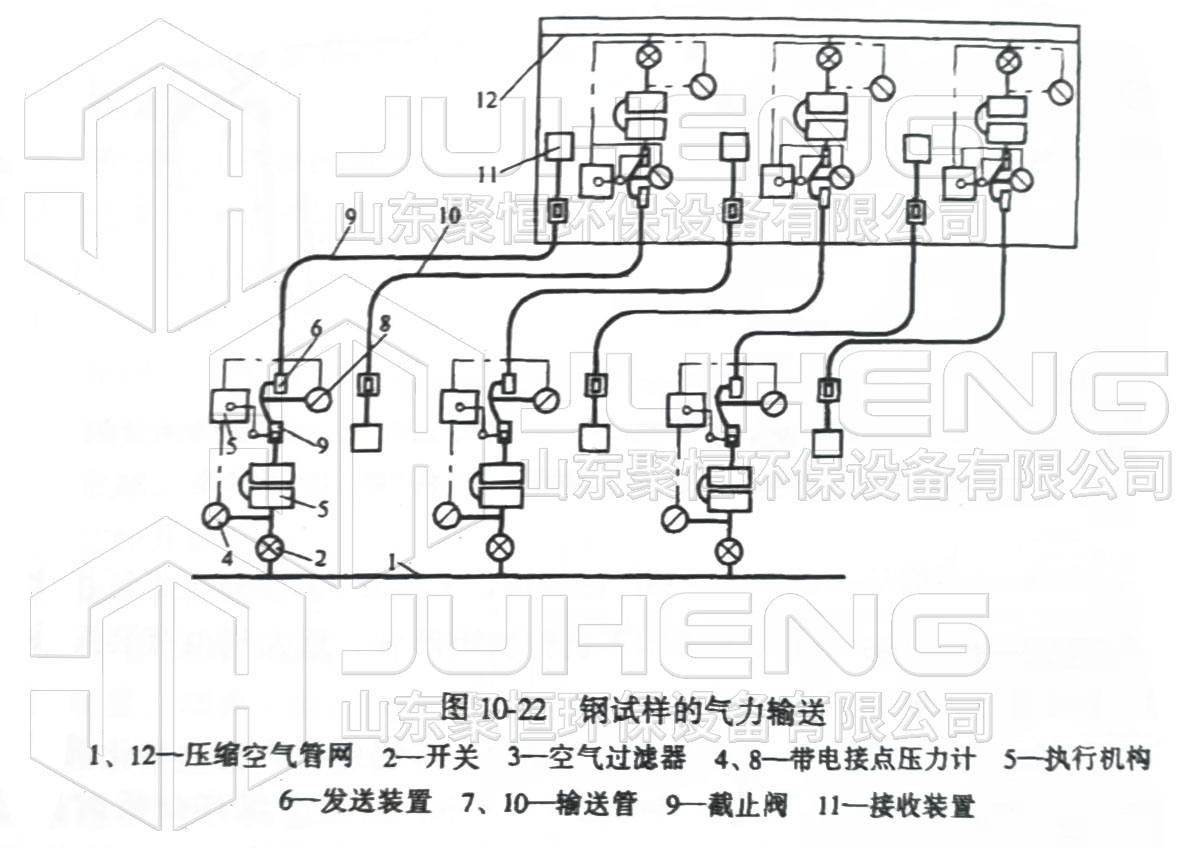
Figure 2 shows the steel sample container transportation scheme adopted by a metallurgical factory. There are three independent double tube devices, each serving a set of open hearth furnaces. The pressure of compressed air is 20-50kPa, and the conveying speed of the sample container is 12m/s. The operating procedure is as follows: When the pipeline is empty, the sample container is stored in the sending device 6 and connectedThe actuator 5 of the cut-off valve 9 can be opened, and the container containing the sample is sent to the laboratory under the push of air pressure. When the sample container comes out of the gate of the receiving device, the pressure in the pipeline drops sharply, and the live contact pressure gauge 2 moves accordingly, thereby connecting the actuator 5 and closing the cut-off valve contact pressure gauge to control the pressure of the compressed air entering the device.
A sintering plant in a metallurgical factory also uses pneumatic conveying for sample delivery. The sintering plant is equipped with two sets of devices. The first set of conveying pipes is 650m long for transporting samples from the section to the laboratory, and the second set of conveying pipes is 300m long for transporting furnace material samples from the furnace preparation to the laboratory. The conveying pipes are seamless steel pipes with a wall thickness of 4mm and a diameter of 76mm in the middle. The curvature half diameter of the pipes is 2m, and the connection of the pipes is made with a centered stop flange. The conveying pipes are wrapped with insulation material, and the compressed air pressure does not exceed 50kPa. The disadvantage of this device is that the sample container makes a loud noise during movement.
In foreign countries, pneumatic conveying of samples has been widely used. A factory in Germany has a conveying length of 0.5-2.5km, and the conveying pipe is a seamless steel pipe with a wall thickness of 3mm and a diameter of 75mm. The conveying speed of the sample container is 8-10m/s or 20-25m/s, and in some cases can reach 37-40m/s. In order to effectively brake the sample container, the receiving station exhausts air from the conveying pipe at a distance of 20-30 meters from the receiving station to reduce its falling speed.
The use of pneumatic conveying of samples in the metallurgical department can reduce auxiliary personnel, strengthen the process, improve product quality, and increase the productivity of metallurgical equipment.
In the machinery industry, 80% of spare parts in a factory in the UK are transported by pneumatic conveying in container containers. When the maximum weight of the material is 4.5kg, the conveying speed of the container can reach 14m/s. A factory in Germany uses container pneumatic conveying to transport parts from the finished product warehouse to the assembly workshop. Another machine manufacturing plant uses a conveying pipe diameter of 450mm, connected to factories 400m apart. Its device is a single tube bidirectional conveying system, and the container is transported or returned from one station to another. The transported objects include technical documents, tools, spare parts, and components. Another example is a container conveying system with walking wheels, with an effective volume of 0.12 square meters, a load of 50kg, and a conveying speed of 5m/s. Meanwhile, the conveying pipes can also be buried underground, greatly reducing construction costs.