
Several main principles for selecting pneumatic conveying blowers
The blower is mainly composed of six parts: motor, air filter, blower body, air chamber, base (also serving as oil tank), and drip nozzle. The blower relies on the eccentric operation of the rotor biased inside the cylinder, and changes the volume between the blades in the rotor slot to suck in, compress, and discharge air. The blower, as a power source device in the pneumatic conveying system, is crucial in the design and use of pneumatic conveying. Multiple types of blowers are used in pneumatic conveying, such as Roots blowers, centrifugal blowers, air compressors, etc. How to select blowers in pneumatic conveying design? Mainly focus on the following four points:
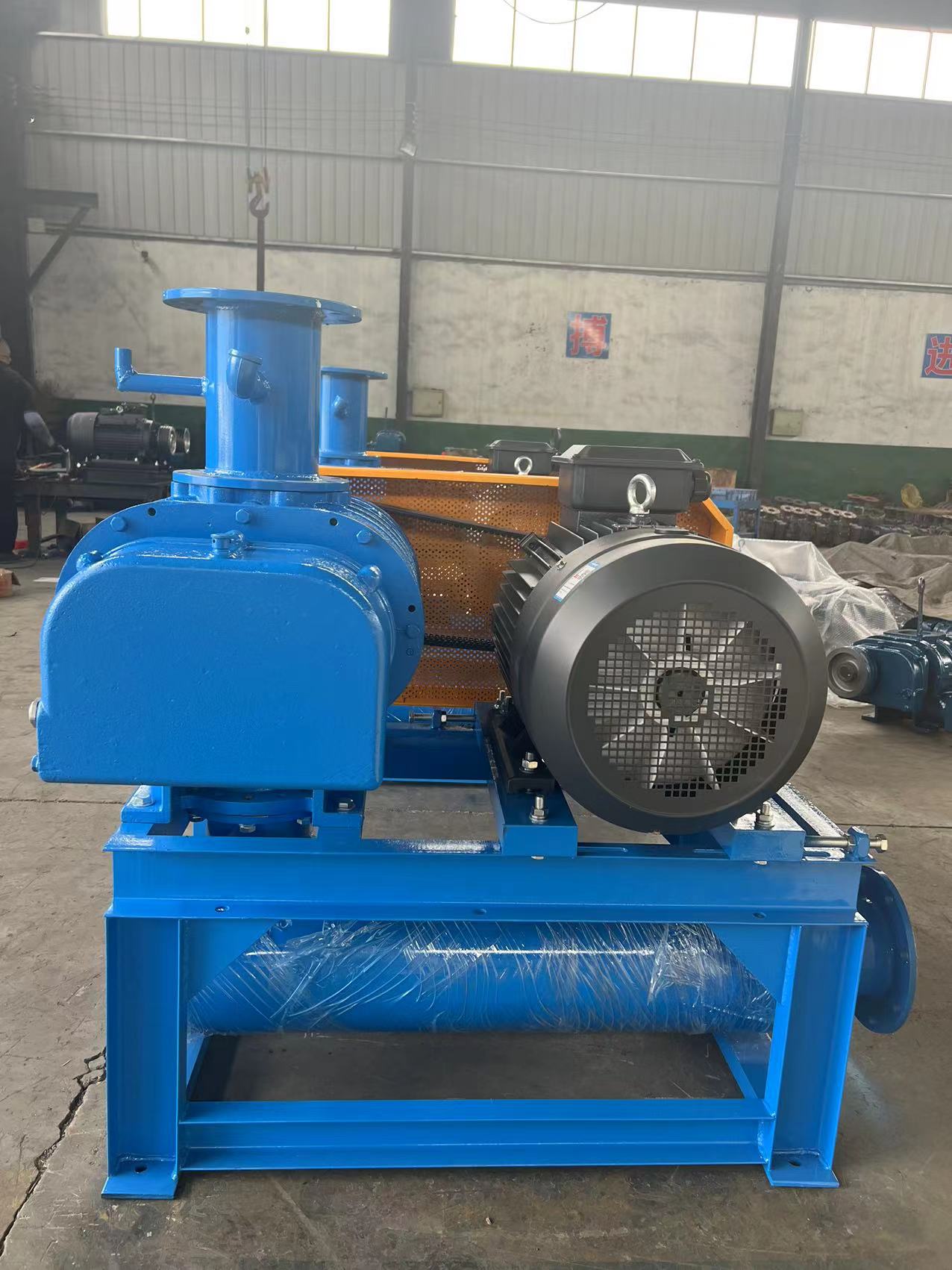
1. Consider the required air volume and pressure for transportation
The first thing we need to consider when choosing a blower is the air volume and pressure required for the pneumatic conveying system, and ensure a certain margin to meet the actual production needs.
2. Consider the pressure changes during the material conveying process
In addition to air volume and pressure, when choosing a blower, it is also necessary to consider the pressure changes during the material conveying process. The changes in air volume should be as small as possible to reduce the impact on the material conveying state and avoid pipeline blockage. For example, due to its inherent characteristics, pressure changes in centrifugal blowers can have a significant impact on conveying.
3. Consider factors such as conveying distance and height
The horizontal conveying distance of different blowers is limited. Generally speaking, for pneumatic conveying systems with a horizontal conveying distance of less than 300 meters, Roots blowers can be used as the air source equipment. If the distance exceeds this, air compressors and other blowing equipment may need to be considered. The influence of conveying height is roughly the same, the higher the vertical height, the greater the working pressure required by the blower.
4. Consider the quality of the blower itself
Finally, it is necessary to ensure the quality of the blower itself, such as the wear resistance and durability of the blower rotor, to ensure the reliable operation of the blower. Meanwhile, a blower with a simple and compact structure should be considered to facilitate maintenance management and reduce usage costs.