
Pneumatic ash conveying equipment
The materials conveyed by pneumatic ash conveying equipment have rapidly expanded from early grains and flour to cement, sand, chemical raw materials, fly ash, coal powder and other materials, with applications covering fields such as grain, ports, chemicals, metallurgy, electricity, casting, food, medicine, etc. The conveying method has evolved from primitive and simple to now perfect and reasonable, from dilute phase suspension conveying to dense phase high concentration plug flow conveying, which has initially solved the problems of high energy consumption, pipeline wear, and material crushing in pneumatic ash conveying.
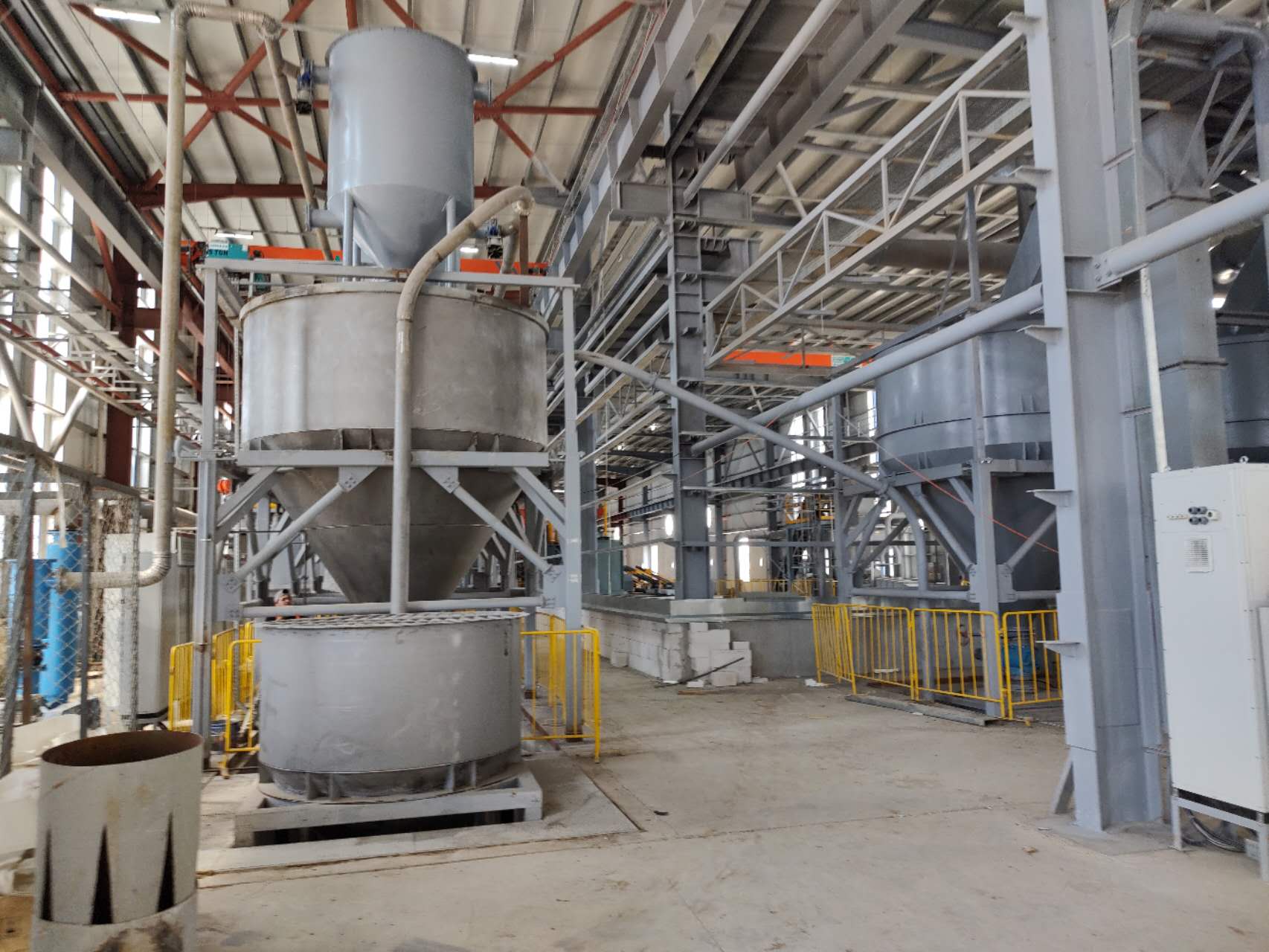
Types of pneumatic ash conveying systems
1、 Suction type pneumatic ash conveying system
The suction type pneumatic ash conveying system adopts Roots blower or vacuum pump as the gas source equipment, and the components of the material collection system are mostly suction nozzles, induction type feeders, etc., which are common process layout systems. The air source equipment is installed at the end of the system. When the fan is running, the entire system forms negative pressure, and the air is sucked into the conveying pipe due to the pressure difference between the inside and outside of the pipeline. At the same time, the material and a portion of the air are simultaneously sucked in by the suction nozzle and transported to the separator. In the separator, the material is separated from the air. The separated material is discharged from the rotary unloader at the bottom of the separator, while the unseparated fine powder particles enter the dust collector for purification with the airflow. The purified air is discharged into the atmosphere through the muffler configured in the system.
System Composition
The suction type pneumatic ash conveying system consists of the following main components, and its working sequence is shown in the figure.

According to different usage requirements, the structural form and composition of certain systems may vary, but regardless of any suction system, it should have the above-mentioned main components.
2. Adaptation conditions
The suction pneumatic conveying system is suitable for conveying powdery and granular materials with good fluidity. It can aggregate from one or multiple points to a certain location, with a wide range of operations. It is flexible and convenient to move, and the conveying route can be selected arbitrarily, so it is very suitable for conveying materials in narrow areas. For example, used for unloading vehicles, ships, and cleaning operations. If installed in restricted areas of the factory, it is not only extremely convenient, but also makes the equipment configuration easy to achieve rationalization.
Due to the fact that the suction type pneumatic conveying system does not allow the conveying gas to escape into the atmosphere during the suction process, it is also suitable for conveying toxic or environmentally polluting powder and granular materials in the factory, especially in situations where dust is required to be avoided at the feeding point.
The suction system can provide continuous feeding and conveying.
The conveying gas is only discharged into the atmosphere through the gas source machinery after conveying the material, so the material is not easily mixed with impurities such as water or engine oil. This characteristic is suitable for conveying materials that require hygiene, such as food and medicine. And the moisture contained in the material is also prone to evaporation during the transportation process.
The suction system can adapt to unloading various types of ship cabins.
3. Advantages:
1) The average productivity is high, and the production capacity of suction type ship unloaders is higher than that of grab type ship unloaders and buried scraper type ship unloaders; Due to the ability to aggregate materials on its own, it requires fewer workers and can greatly reduce labor intensity.
2) Simple and compact structure, easy installation, light weight, low cost, and can reduce the load on the installation site (dock).
3) Flexible and simple operation, easy to use, and low management and maintenance costs.
4) Less moving parts, reliable operation, and easy implementation of automation.
5) When sucking and transporting grain materials, the conveying process can simultaneously carry out ventilation and dust removal, evaporate some moisture, reduce grain mold, and improve product quality.
6) When working outdoors, it is not affected or restricted by climate and surrounding environmental conditions.
7) When used for unloading ships at ports, it also has the following advantages:
① Can thoroughly clear the cabin.
② Not affected by tides and water level changes.
③ Due to the fact that the suction pipe can be connected to a flexible pipe, even in the event of ship swaying due to wind and waves, it will not damage the cabin floor and suction pipe. This advantage is particularly prominent for small wooden barges in inland rivers.
④ The suction process will not raise dust inside the cabin, which can greatly improve the working environment.
⑤ The materials are in a sealed state during the outbound transportation process, without any concerns of scattering or contamination caused by impurities.
⑥ It can unload evenly and prevent the ship from being affected by uneven buoyancy.
The material conveying pipe can maintain cleanliness, making it easy to achieve multi-purpose use of one machine, that is, after conveying one material, it can be used to convey other materials.
2、 Compressed pneumatic ash conveying system
There are various types of pneumatic ash conveying systems, including low-pressure pneumatic ash conveying systems, high-pressure pneumatic ash conveying systems, fluidized pneumatic ash conveying systems, and pulse plug flow pneumatic ash conveying systems. Regardless of the type of system mentioned above, the gas source equipment is located at the feeding end of the system. Due to the gas source being located at the front end of the system, materials cannot enter the conveying pipe freely and smoothly, and a sealed feeding system must be used. Therefore, the feeding components of this system are more complex than those of the suction type. After the conveyed material is compressed and delivered to the conveying destination, it is separated in the separator or storage bin and discharged through the unloading system. The compressed air is purified by the dust collector and discharged into the atmosphere.
The pressure feeding pneumatic ash conveying system uses compressed air to blow materials, and the pressure of the conveying pipe is higher than atmospheric pressure. According to the degree to which the pressure inside the pipeline is higher than atmospheric pressure, it can be divided into two types: high-pressure delivery and low-pressure delivery.
3、 Hybrid pneumatic ash conveying system
The combination of suction type pneumatic ash conveying system and pressure type pneumatic ash conveying system is called a hybrid pneumatic ash conveying system. For example, materials are sucked from the suction nozzle into the feeding pipe and sent to the separator. They are then discharged by the lower unloader (which also serves as a feeder for the pressure feeding part) and sent to the pressure feeding feeding pipe. The air from the separator enters the fan through the air duct, and after compression, it enters the feeding pipe to press the materials to the unloading location. The material is discharged through the unloader, while the air is purified by dust removal and discharged into the atmosphere through the air duct muffler.
The hybrid pneumatic ash conveying system combines the characteristics of suction and compression systems. It can suction and pressure feed from several places to a distant location, but its structure is complex and the working conditions of the air source equipment are poor, which can easily cause wear on the fan blades and housing.