
How is positive pressure pneumatic conveying implemented and how should we choose it?
withpneumatic conveyingMany industries have begun to adopt it due to its widespread popularityPositive pressure pneumatic conveying systemTo transport materials, such as pharmaceuticals, chemicals, metallurgy, feed mills, food factories, etc., enterprises that use powder particles as transmission media are particularly widely used. This method can greatly reduce costs, improve production efficiency, and make workshop buildings cleaner and more tidy. So, how is positive pressure pneumatic conveying achieved? Let's study it together below.
Positive pressure pneumatic conveying system is a method of conveying materials using positive pressure gas. Positive pressure pneumatic conveying system, also known as pressure conveying pneumatic conveying system, inputs gas into the system during pressure conveyingfeederInternally, the air and materials are mixed, and the mixed gas and materials are separated into objects and gases through a separator. The gas is discharged into the air after passing through a dust removal device, and the materials are deposited into the silo.
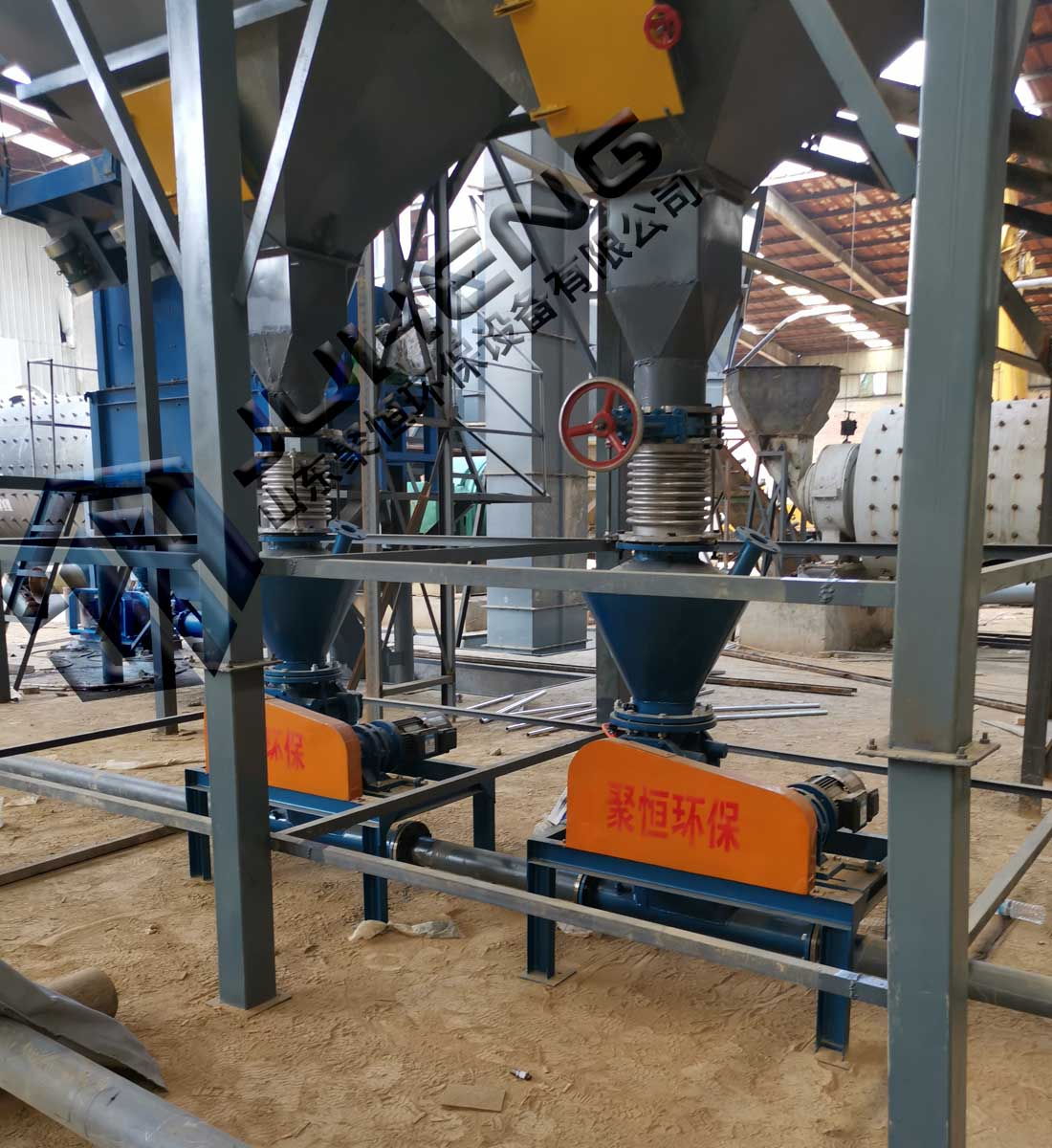
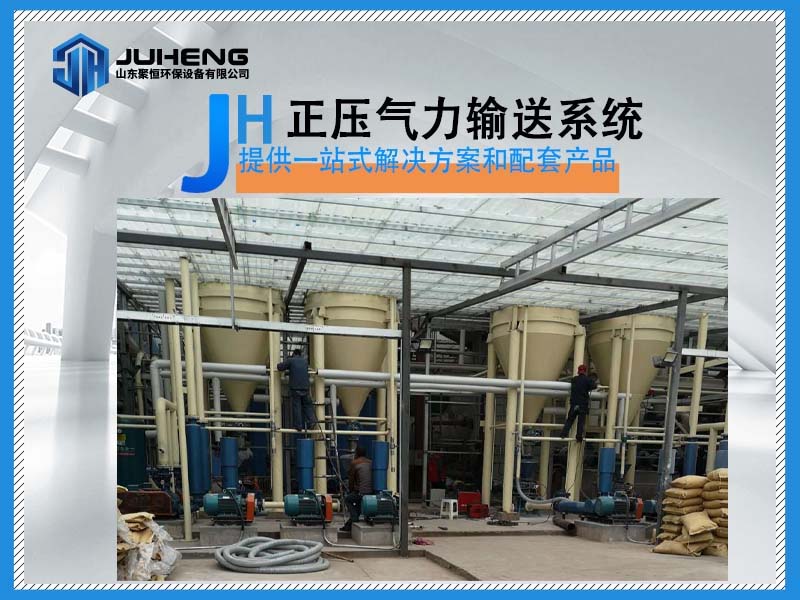
As shown in the figure:
Characteristics of positive pressure conveying system:
1、Positive pressure conveying systemEasy to install branching pipelines, capable of simultaneously transporting materials to multiple outlets, with high production efficiency.
2、Positive pressure conveying systemThe leakage location is easy to detect and does not require high dust removal for the air.
3. The system has smaller conveying capacity and less wear on the pipeline;
4、Positive pressure conveying systemLong conveying distance, can reach over 1000m;
5. Air supply pipes can be installed inside and outside the conveying pipeline, and various methods can be used to supply air and remove blockages.
Composition of positive pressure conveying system
It mainly consists of equipment such as power source (fan), feeder, conveying pipe, material separator, and dust collector.
1. Source power:blowerCompressors, exhaust fans, or vacuum pumps are used to generate airflow and provide energy for the entire conveying process;
2、feeder/Loading machine: a device that can mix materials with air and feed them into the conveying pipe. The rationality of the structure of the feeder directly affects the conveying capacity, working stability, and power consumption of the entire wind power device.
3. Conveyor pipe: Reasonable layout, selection of conveying pipes and structural dimensions can avoid pipeline system blockage or reduce wear, reduce pressure loss, and have a significant impact on the productivity, energy consumption, and reliability of the conveying device.
4. Material separator: It can separate the conveyed material from the airflow. Commonly used separators include centrifugal separators and volumetric separators.
5、dust collectorThe gas coming out of the separator contains dust ranging from 5 to 40 microns, which can be removed by a dust collector to prevent air pollution and fan wear.
Advantages of positive pressure pneumatic conveying system:
1. High work pressure and large conveying capacity. Therefore, long-distance and high-capacity transportation can be achieved, and the use of boosters can achieve ultra long distance transportation;
2. Due to the relatively low conveying speed of materials, there is less wear and tear on the conveying pipelines and materials;
3. High material to gas ratio, low gas consumption, and cost savings in operation;
4. It can be transported from a single point to multiple points, or fed and unloaded from multiple points, making it easy to design the process;
5. The system has high pressure and low gas consumption;
6. The conveying gas volume is small, and the separation of material and gas is easy to achieve;
7. High degree of automation, in the process of conveying, the processes of measuring ingredients, screening, mixing, iron removal, and impurity removal can be achieved simultaneously; Meet your production needs;
8. Fully enclosed pipeline transportation, environmentally friendly and pollution-free;
9. Stable and reliable operation, no leakage, no dust;
10. Modular design makes maintenance simpler and more convenient.
Nowadays, the application of high-pressure dense phase systems has become very popular, especially for long distances and high transport volumesbigCompared with other conveying systems, positive pressure dense phase pneumatic conveying has the advantage of being more stable in multiple conveying scenarios. This method has a longer transmission distance and is suitable for granular conveying,Very broad, targeting longLong distance, conveying capacitybigCompared with other conveying processes, positive pressure dense phase has the advantages of low energy consumption and more stability in multiple conveying occasions. This method is often suitable for longer pipeline distances and for fine, granular, abrasive, non abrasive, and other difficult to transport materials, such as bentonite/rare earth oxide transportation, new material transportation, bone particle transportation, fly ash transportation, calcium carbonate powder transportation, sugar alcohol, white sugar, milk powder materials, etc., and can be implemented in betweenProcess technologies such as iron removal, filtration, drying, pressure holding, and vacuum pumpingcombination If you happen to need a pneumatic conveying system,JuhengOur experts will design a free pneumatic conveying solution for you.