
Where should we pay attention to the pneumatic conveying of lithium battery raw materials?
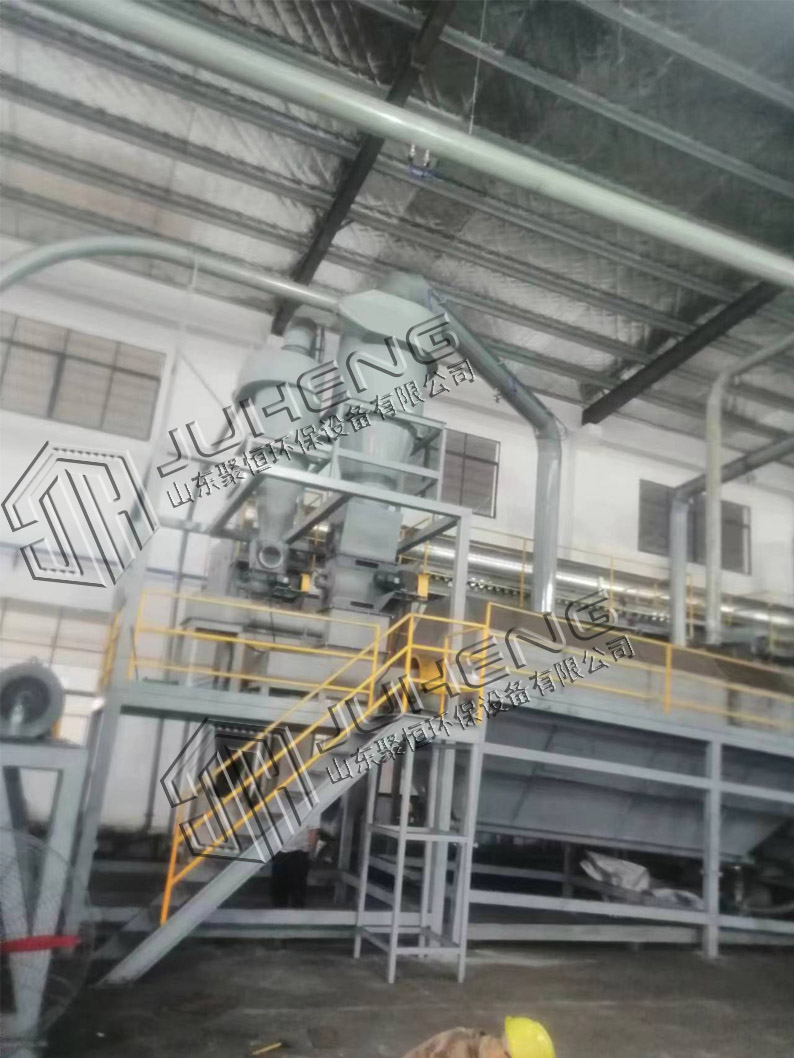
Pneumatic conveying of lithium battery raw materialsIt is a new production line in the lithium battery industry that uses pneumatic conveying to transport powder materials from lithium batteries in pipelines, avoiding powder pollution and saving materials. It can be automatically controlled throughout the entire process, including metering, batching, conveying speed, conveying time, mixing ratio, screening, crushing, and other processing.
The positive electrode material is the most critical raw material in lithium batteries, and the performance of ternary materials in lithium batteries will determine the key performance of power batteries. The positive electrode material will affect the performance of lithium-ion batteries, such as energy density, consistency, safety, and cycle life. Due to the fact that the positive electrode material of lithium-ion batteries can account for up to 40% of the battery cost, its cost directly determines the level of battery cost.
At present, the mainstream ternary materials for lithium batteries include lithium cobalt oxide (LCO), lithium manganese oxide (LMO), nickel cobalt manganese oxide ternary material (NCM), nickel cobalt aluminum oxide ternary material (NCA), and lithium iron phosphate (LFP).
At present, the mainstream choices of positive electrode materials for power batteries of new energy vehicles in the market are mainly ternary materials, lithium manganese oxide, and lithium iron phosphate. In the field of power batteries, lithium iron phosphate cathode materials have an extremely long cycle life, excellent safety performance, good high-temperature performance, and relatively low price. Moreover, the low-temperature performance and rate discharge of lithium iron phosphate materials can reach the level of lithium cobalt oxide. Currently, it is the mainstream power battery material in the market. However, due to defects in energy density, poor product consistency, and low-temperature performance, it is gradually being replaced by ternary materials.
The significant increase in production of new energy vehicles has driven a rapid growth in demand for power batteries. As the main positive electrode materials for power batteries, the demand for lithium iron phosphate and ternary materials has grown rapidly. Research statistics show that in 2015, the production of lithium iron phosphate and ternary materials in China reached 32400 tons and 36500 tons respectively, an increase of 131.4% and 72.2% year-on-year. In 2016, the production of lithium iron phosphate and ternary materials in China reached 53000 tons and 52000 tons respectively, an increase of 63.58% and 45.21% year-on-year.
With the gradual maturity of the safety of ternary materials in the power field and the increasing demand for range in the consumer market, high nickel ternary material batteries with significant advantages in energy density are widely favored by the market and have become a research hotspot for many power battery companies.
Three element positive electrode material, composed of a ternary composite positive electrode material with equal molar ratios of manganese, cobalt, and nickel (LiNi1/3Co1/3Mn1/3O2). Due to its high specific capacity, good cycling performance, good thermal stability, and lower prices of manganese and nickel compared to cobalt, LiNi1/3Co1/3Mn1/3O2 is an ideal cathode material for lithium-ion batteries, greatly reducing material costs.
Pneumatic conveying of ternary materialsWhat requirements are needed:
1. Manganese
1) Strong and brittle in texture
2) Density 7.44 grams per cubic centimeter
Manganese is relatively hard and has a high specific gravity, making it difficult to transport. When transporting ternary manganese raw materials, ceramic pipes and tungsten carbide coatings must be used.
The manganese ratio is significant, and in the lifting stage, it is important to pay attention to the amount of material added to prevent blockage.
2. Cobalt
1) Specific gravity 8.9
2) Relatively hard and brittle
3) Cobalt is ferromagnetic
Cobalt is relatively hard and has a high specific gravity, making it difficult to transport. When transporting ternary manganese raw materials, ceramic pipes and tungsten carbide coatings must be used.
The cobalt ratio is significant, and in the lifting stage, it is important to pay attention to the amount of material added to prevent blockage.
3. Nickel
1) Specific gravity 8.9
2) Relatively hard and brittle
3) Nickel is ferromagnetic
Nickel is relatively hard and has a high specific gravity, making it difficult to transport. When transporting ternary manganese raw materials, ceramic pipes and tungsten carbide coatings must be used.
The nickel ratio is significant, and in the lifting stage, it is important to pay attention to the amount of material added to prevent blockage.
Ternary materials are materials with very strong grindabilitypneumatic conveyingBe sure to pay attention to prevent it from wearing out.
Shandong Juheng Environmental Protection Equipment Co., LtdWith 13 years of experience in the pneumatic conveying industry, we provide customers with solutions ranging from single equipment to overall matching, including feeding, storage, metering, mixing, conveying, screening, crushing, and more. We have rich experience in the transportation of lithium battery raw materials and can accurately transport them according to the transportation volume and mixing ratio. Our experts can provide free on-site design solutions, free machine testing, and strive to create products that satisfy customers.