
How to design a powder pneumatic conveying system?
Powder pneumatic conveyingThe design does not have a fixed design scheme, but in principle, it uses air as the carrier medium and utilizes high-speed airflow to transport materials and air from one end of the pipeline to the other. The equipment that transports materials in this way is called a pneumatic conveying system.
The diameter and shape of each powder or particle have a significant impact on the conveying stage, determining the fluidity and the amount of air required to move the material. Not only that, the humidity of the material can also affect the flowability, which is a very important parameter in designing pneumatic conveying systems. Excessive humidity can cause the material to stick to the pipeline and cause blockage. Adhesive properties can cause materials to adhere to each other under air pressure, resulting in blockage inside the pipeline. When designing a pneumatic conveying scheme, it is necessary to know the parameters of the conveyed material.
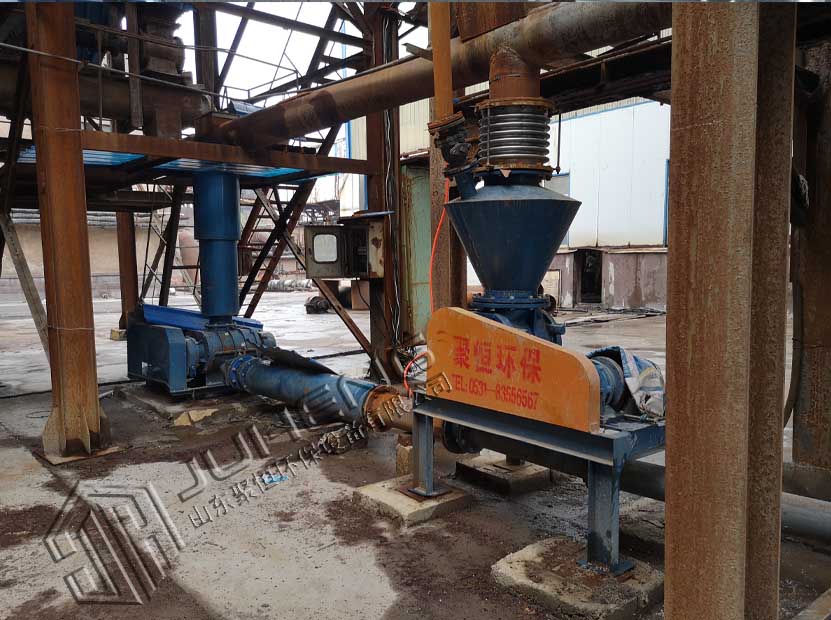
Positive and negative pressure pneumatic conveying system - a device for conveying air pressure in pipelines with a pressure of 0.1Mpa
How to choose the appropriate conveying method? Conveying methods are divided into dense phase conveying and dilute phase conveying. The characteristic of the dilute phase pneumatic conveying system is that the material conveying speed is fast, and the material is constantly suspended in the airflow, so that the material will not accumulate at the bottom of the conveying pipeline. Used for materials with low density and low grindability. For example, fly ash, fly ash, fish meal, corn meal, starch and other materials. Larger materials require a larger airflow to maintain their suspension in the pipeline. Due to the high speed of dilute phase pneumatic conveying, it is inevitable to encounter bends when encountering turns. Therefore, bends are made of ceramic structure, and the material is not easy to maintain integrity. If you are not concerned about the integrity of the material, then this is a cost-effective conveying method.
The positive pressure dense phase pneumatic conveying system has a slower conveying speed compared to the former, resulting in lower energy consumption. It is 35-60% of the dilute phase conveying system and can achieve less pipeline wear and material breakage. Due to the large solid to gas ratio of the conveyed material, less gas is used, so inert gas can be used to transport some flammable and explosive materials.
The design of pneumatic conveying systems must follow the following criteria: conveyed materials, distance, height, speed, solid gas ratio, temperature, pressure, and humidity. Therefore, choosing a pneumatic conveying system requires professionals to design it. You can contact our customer service in full or call us directly18660786555We will provide free design solution services.