
The pneumatic conveying system must be designed with reasonable parameters
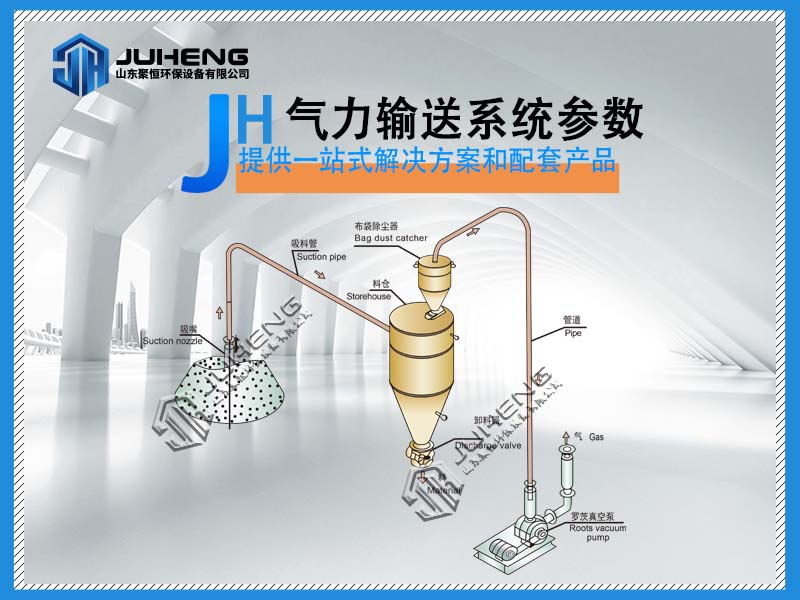
The pneumatic conveying system is a large and complex system constructed from multiple complex automatic systems. Improper matching of one component can affect its later use and must be executed according to strict standards. Such a pneumatic conveying system can avoid many misunderstandings? Through this article, you will understand the importance of parameters in pneumatic conveying systems.
1. Miscalculation of pressure:
Accurately calculating the pressure drop of the entire pneumatic conveying system's line length is relatively difficult because there are many variables in a pneumatic conveying system, including the diameter of the pipeline, the layout of the line, the density of the product, the particle size of the powder material, and so on. However, pressure issues are crucial in the entire pneumatic conveying system, and even a small mistake can cause overall problems in the pneumatic conveying system, which greatly reflects the manufacturer's technical capabilities.
2. Low picking speed:
There will be a pressure gradient on the pneumatic conveying system, and when there is a significant difference in air velocity between one end and the other end, without considering the pressure drop through the system, the picking speed is usually not high enough to make the product fluidized, otherwise it is easy to cause blockage of the picking device.
3. Underestimating traffic:
The design of the average flow rate in pneumatic conveying systems is prone to errors, as productivity often varies. Assuming you want the system to operate at peak flow rates. When the pneumatic conveying system is executed at the highest end, the originally designed average flow rate may not achieve the desired effect and may even clog the pipeline. So when designing the average flow rate, it is necessary to include the variable of peak capacity. The conveying capacity of the pneumatic conveying system can be adjusted to better meet the demand.
4. Incorrect airflow diversion:
When designing a pneumatic conveying system, if it is in a system with multiple receiving points, ensure that an airtight splitter is used to correctly transfer the airflow. Airflow is only designed to pick up and transport from one point to another. Setting up a steering valve through PCL control system allows for flexible layout and precise batching of transportation from multiple points to multiple points.
5. Improper filtration:
The design of exhaust filters is for air emissions rather than conveying air, and some manufacturers mistakenly rely on ventilation filters on silos, which may cause problems with the new airflow in the system. In addition to the small ventilation filters on the silos, bag filters are very important as they can handle the conveying airflow.
6. Neglecting corrosion of components:
Due to the differences in the characteristics of different materials, some materials from chemical and plastic manufacturers may have corrosive and acidic properties. If corresponding anti-corrosion treatments are not carried out according to the materials, it is easy to cause corrosion in the layout. So in order to ensure the stable operation of the pneumatic conveying system, it is necessary to ensure that the contact parts of the material are made of stainless steel material.
The design of pneumatic conveying is very complex, not only considering the site, but also the material of the conveyed material. Reasonable design of air volume, pipeline material, and pipeline design are important factors to ensure the normal operation of the conveying system. Therefore, we need to choose professional manufacturers so that our production efficiency can be improved and equipment operation can be more stable. Welcome to consult us.