
Introduction to Pneumatic Conveying Technology
Powder, also known as solid powder particles, is a collective of particles. Powder pneumatic conveying generally uses airflow to transport powder from one end of a pipeline to the other, and also includes the method of conveying powder in an air conveying chute using compressed air.
As early as the late 19th century, the powder particlesPneumatic conveying technologyIt has already been applied, and after more than a hundred years of development, coupled with the current PLC control system, it has become very mature and flexible. It has advantages such as system sealing, dust prevention, and environmental protection compared to the powder conveying methods of belt conveyor, pipe chain conveyor, and transport vehicles. Therefore, it is widely used in powder transportation in various industries, including lithium battery industry, chemical industry, light industry, petrochemical industry, food, medicine, power, building materials, transportation, metallurgy, mining, and environmental engineering.
Powder transportation is often encountered in many industries, so it involves a wide range of industries, with different materials and diverse process flows. Therefore, manufacturers lacking transportation experience may encounter problems due to inadequate consideration.
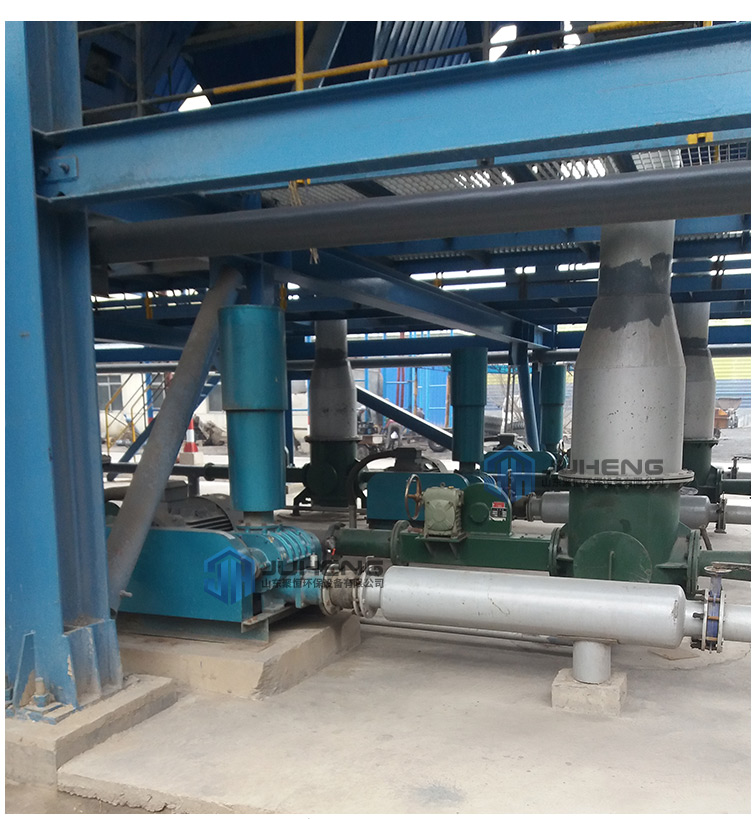
Because pneumatic conveying of powder particles not only involves powder technology, but also fluid mechanics, etc. The actual conveying process is a rather complex and variable process. Although pneumatic conveying technology is becoming increasingly popular, in order to make pneumatic conveying devices or systems technologically advanced, economically reasonable, and meet environmental impact requirements, in-depth theoretical research and practical experience accumulation guidance are still needed.
The properties of materials are closely related to pneumatic conveying. Even for the same material, its conveying performance may vary greatly due to differences in particle size or moisture content, such as phosphate powder, calcium carbonate precipitate, etc. As the moisture content increases, pneumatic conveying cannot be carried out. Transporting materials with strong abrasion resistance requires equipment to use wear-resistant materials and suitable structural types. For brittle and fragile materials, as well as materials with quality degradation caused by drunkenness, special consideration must be given to the selection of wind speed; For materials that are prone to combustion and explosion at a certain concentration and temperature, it should be considered that the temperature of the material should not exceed the ignition point during pneumatic conveying, otherwise inert gas conveying should be considered.
In short, the characteristics of pneumatic conveying and conveying materials are closely related. Nowadays, pneumatic conveying has been widely used as a relatively advanced conveying technology, and its research and testing are becoming more and more in-depth. It is believed that with the continuous deepening of scientific experiments and related engineering practices, pneumatic conveying technology will further develop and become increasingly perfect.Shandong Juheng Environmental Protection Equipment Co., LtdWith 13 years of experience in pneumatic conveying, if you need pneumatic conveying equipment, please feel free to consult us. We provide free on-site design solutions, free machine testing, one-year warranty, and lifetime maintenance services.