
These four points are worth noting in pneumatic conveying
Inpneumatic conveyingDuring transportation, it is inevitable to encounter some special materials, as well as factors such as the size of the conveying volume, the height of the conveying, etc. However, the most noteworthy are the chemical characteristics of the conveyed materials, the type and structural materials of the equipment, and the ability of pneumatic conveying. Below, we will divide these issues into four categories and explain in detail the four points that should be paid attention to.
1. The physical and chemical properties of the conveyed material
The physical and chemical properties of materials that should be understood in pneumatic conveying design include particle size, density, moisture content, moisture absorption, flowability, corrosiveness, etc.
Generally speaking, the average particle size of a material is used as its particle size. Not only do we need to know the average particle size of the material, but we also need to know the particle size distribution of the material and the percentage of each particle size.
Good fluidity of materials is beneficial for material supply and transportation systems, pipeline transportation, and material gas separation.
The flowability of materials is usually represented by static friction angle and internal friction angle. The smaller the static friction angle and the smaller the internal friction angle, the better the flowability of the material.The chemical properties, density, and hardness of particles are related to the wear of equipment, and therefore must be based on their characteristics.
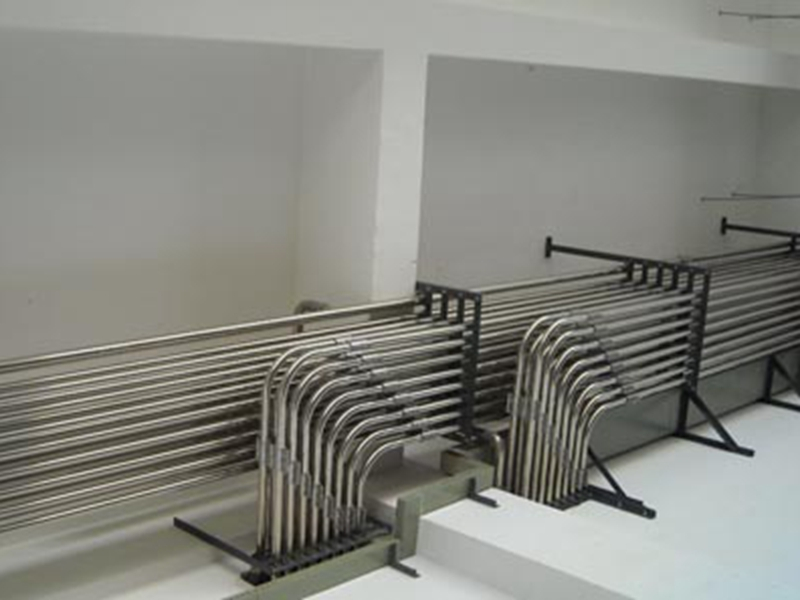
2. Select the type, structure, and material of the equipment, as well as the conveying capacity of the pneumatic conveying device
The conveying capacity of pneumatic conveying devices is a very important parameter, therefore, the capacity and specifications of the equipment must be determined based on the unit conveying capacity. In order to adapt the instantaneous conveying capacity to production requirements, corresponding instrument automatic control is needed to automatically adjust the output.
Transportation capacity. The silo pump conveying device can be adjusted according to the number of times per hour; For rotary feeders and screw pump feeders, the feeding amount can be adjusted. In system production, the adjustment of pneumatic conveying capacity mainly relies on the intermediate warehouse as a buffer.
3. The starting and ending stations of the conveying device
Departure Station:
(1) The starting station should have sufficient space.
(2) The plane position and height between the starting station and the front receiving point should be clear and used as the design basis.
(3) Clearly define the feeding method for the contact point.
(4) Changes in feed rate and instantaneous feed rate.
(5) Prevention and control of noise.
(6) Understand the atmospheric conditions at the starting station and propose corresponding measures for dehumidification.
Terminal station:
(1) After the two-phase flow reaches the final station, gas-solid separation should be quickly and effectively carried out before unloading. There are various types of pneumatic conveying unloaders, which can be divided into gravity type, inertia separation type, centrifugal separation type, and other options.
(2) The second important issue for the terminal station is the reasonable selection of dust removal equipment. Select dust removal equipment based on the nature of dust generated by different materials.
4. Conveyor distance and conveyor line
Pneumatic conveying system. When determining the conveying method and required power, the pneumatic conveying distance and conveying line are important criteria. Reasonable selection of power transmission lines can not only save the power of compressed air, but also bring convenience to operation, maintenance, and repair.
In pipeline design, bends should be minimized as much as possible, and pipeline installation should consider maintenance channels. Inspection holes should be installed in the main components and materials of the equipment that are prone to blockage and require frequent replacement.
In the design of pneumatic conveying, the equipment models selected are also different due to terrain and climate reasons, especially in the design of pipelines. If the design is not reasonable enough, not only is the conveying efficiency low, but there is also a risk of easy blockage. Therefore, it is recommended that everyone choose equipment withPowerful manufacturersIf you need pneumatic conveying equipment, please feel free to contact us. We provide free on-site design solutions, free machine testing, one-year warranty for the whole machine, and lifetime maintenance services.