
Special attention should be paid to the properties of materials in pneumatic conveying
The particle size, density, brittleness, hardness, and other characteristics of materials have a significant impact on the effectiveness of pneumatic conveying. Material properties include particle characteristics and volume. In recent years, pneumatic conveying systems have been widely used in industries such as power, chemical, building materials, coatings, and food, and have gradually become a common mode of transportation. Previous pneumatic conveying devices mostly used dilute phase suspension flow to ensure the reliability of conveying. However, this conveying method clearly has drawbacks such as high energy consumption, low conveying efficiency, severe wear, and low precision in conveying flow control. In order to overcome these shortcomings, with the widespread application of dense phase pneumatic conveying technology, researchers have shown great interest in dense phase pneumatic conveying technology with low energy consumption, high solid to gas ratio, small gas-solid separation, and superior performance. The influencing factors have also become another research hotspot. There are many and complex factors that affect dense phase pneumatic conveying, such as material properties, pipeline characteristics (length, inclination angle, bends, etc.), conveying pressure, etc. Through research, it has been found that the influence of material properties on the characteristics of dense phase pneumatic conveying is very important. In the dense phase, this effect comes from the performance or flow behavior of the feed group, involving a wide range and having a significant impact.
The characteristics of powder and granular materials have a significant impact on the success and effectiveness of pneumatic conveying. The characteristics of different materials are different, and the same material may not have the same pneumatic conveying characteristics. For example, the pneumatic conveying behavior of the same powder with different particle sizes may be completely different. The so-called conveying characteristics are established on the coordinate graph of material mass flow and air mass flow, based on the isobaric pressure drop line of the conveying pipe and the isobaric solid gas ratio line within the range of material conveying capacity. For a given pipeline, the pressure drop line and its shape, slope, and quantity vary greatly depending on the material.
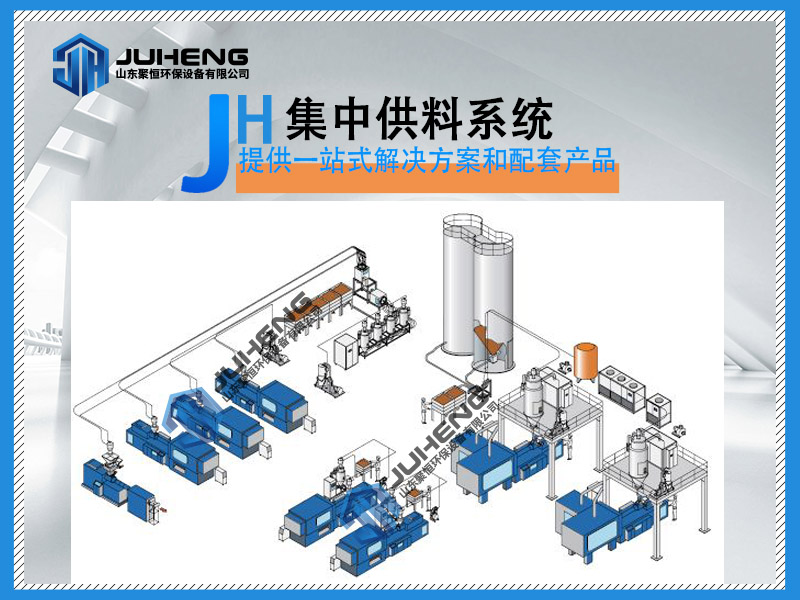
feature
1. Characteristics of block materials
Block materials are composed of a large number of individual particles, which often have different sizes, shapes, and even chemical compositions. There is a free space or gap around each particle, so block like matter can be seen as an irregular combination of particles and space. In pneumatic conveying, the conveying airflow (mainly air) occupies space, so the relationship between these particles and the surrounding airflow determines the behavior of bulk materials and their "pneumatic conveying characteristics". Some properties of bulk materials are related to individual particles, but most are related to the bulk (stacking) state of the material. The overall material properties in a stacked state are called 'bulk properties'.
2. The stacking angle is the mass of a block divided by its volume.
Due to the fact that bulk materials are composed of many irregular material particles, including the volume of particles and the spacing between particles, bulk materials have a significant packing density, which depends on the density, shape, loading method, and coordination of the particles. For specific bulk materials, there is no single value for bulk density. It varies greatly with the density of the material and is also related to the method of loading particles into the container. It is usually more suitable to provide a range of bulk densities rather than individual values. When conducting any volumetric bulk density measurement, the experimental conditions should be simulated or as close as possible to the actual situation
3. Compressibility
The packing density can be regarded as a function of the volumetric packing state (i.e. from loose to compacted), and therefore it is also a function of permeability. Especially for high concentration and low-speed pneumatic conveying, the compressibility and permeability of the material determine the difficulty of gas storage and the impact of gas flow through a moving bed or plug on the material. There are two forms of stickiness, namely stickiness and cohesiveness. The former refers to the connection between different entities, such as powder particles attached to the surface of processing devices, pipelines, or silo walls; The latter refers to the connection between the same entity, such as the aggregation of large particles. In addition to the adhesion force between the bulk material and the pipe wall, the airflow also generates separation force, causing the adhesion layer to separate from the pipe wall. Only when the adhesion force is greater than the separation force, the adhesion layer will appear on the pipe wall, which is related to the characteristics of the bulk material, the pipeline and pipe wall, and the gas velocity. In general, for extremely fine powders, the higher the conveying airflow velocity, the greater the wall pressure, and the greater the adhesion force. Only when the gas velocity exceeds the critical point, adhesion will no longer occur.
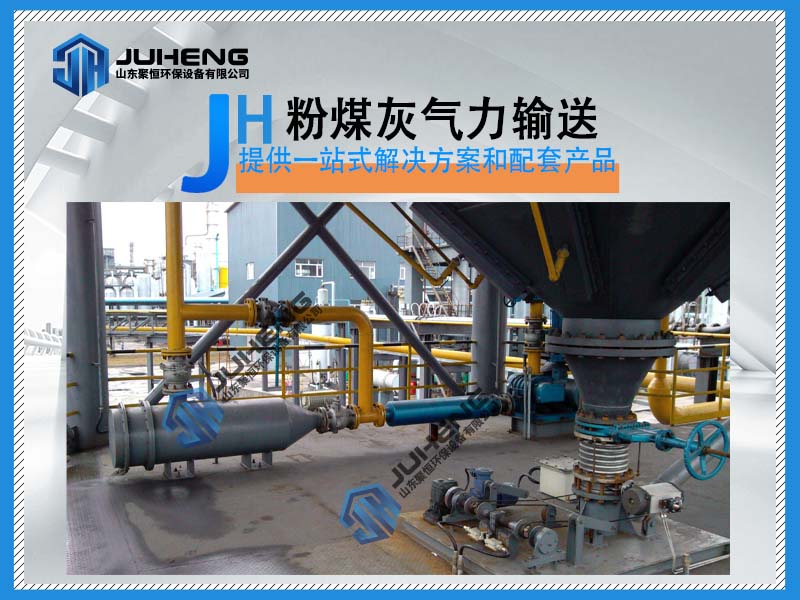
4. Moisture absorption, deliquescence, and moisture content
Bulk materials with hygroscopicity are prone to absorbing water, clumping, adhering to pipe walls, and even causing blockages, while organic materials are more prone to spoilage due to excessive water absorption. For example, plastic powder, fertilizers, cement, and fly ash can all absorb a large amount of moisture from the air. If bulk materials not only easily absorb moisture but also deliquescence, the situation is more serious. Therefore, it is necessary to use completely dry air as the conveying medium and pay attention to the moisture content of bulk materials. The maximum moisture content of bulk materials can be conveyed through pneumatic conveying, depending on the material type and conveying method. Generally speaking, the moisture content of bulk materials pumped by vacuum pumps is higher than that of bulk materials pumped by pressure pumps. Of course, the moisture content of bulk materials also brings certain benefits, such as less dust, which can suppress the accumulation of static electricity and dust explosions. Although pneumatic conveying has been widely used in industry for decades, especially after the application of dense phase pneumatic conveying technology, it has made great progress. However, so far, people mainly rely on conducting pneumatic conveying tests on a full-size experimental platform to determine whether a bulk material can be transported in a dense phase and what flow method to use. Therefore, analyzing the test data of material characteristics and predicting whether dense phase pneumatic conveying and its flow mode can be adopted is one of the most promising topics in the research of bulk material processing. People measure the parameters of materials on the test bench and correlate the obtained values with actual full-scale test results, or make inferences based on existing operating experience. In summary, research work is still deepening, and people are gradually realizing that the conveying capacity of bulk pneumatic conveying depends on the properties of the material, and the main parameters include particle size and particle size distribution, shape, particle size and bulk density, permeability coefficient, fluidity, and cohesion.
Due to the different properties of different materials, the structure of the designed pneumatic conveying system will also vary greatly. Special processing methods will be used for special materials, such as conveying explosive materials with inert gas and lime with heating devices to prevent pipe blockage caused by agglomeration during transportation. When choosing pneumatic conveying, one should choose manufacturers with strong capabilities. Shandong Juheng Environmental Protection Equipment Co., Ltd. has many years of experience in the pneumatic conveying industry, with Juheng's presence in industries such as chemical engineering, food processing, and pharmaceuticals. If you are interested in pneumatic conveying systems, please feel free to contact us.