
How do different types of pneumatic conveying work
different typespneumatic conveyingHow to keep materials flowing at the best speed. Choosing the appropriate pneumatic conveying method based on different materials can result in high conveying efficiency and stable operation.
Dilute phase pneumatic conveying is a conveying method with a relatively low solid to gas ratio, which uses a large amount of air to transport materials. Use Roots blower to create sufficient pressure to maintain a certain solid to gas ratio between the material and air. The air velocity used in dense phase pneumatic conveying is relatively high. This combination of high/low pressure can enable air to do other things, not just transport materials. Air can control the temperature of the conveyed material, making cooling the material simple and finely controlling the temperature from one stage to the next. At high airflow speeds, the transported material remains in the center of the pipeline, and the airflow is suspended. In a dense phase pneumatic conveying system, if the pressure in any area of the pipeline decreases, the impact of the lower pressure on the conveyed material is much smaller.
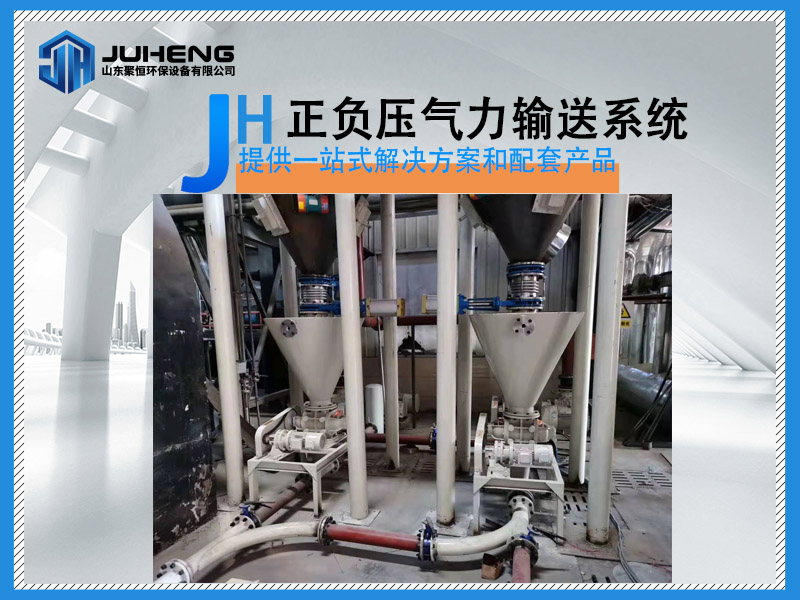
Dilute phase pneumatic conveying usually uses Roots blowers to transport less air, but at a higher pressure than dilute phase pneumatic conveying. This higher pressure allows dilute phase transport to move some materials in a ratio of up to 7:1 between material and air. When the pressure is kept at a lower level, there can be greater speed. The dilute phase also adopts a suspension flow similar to that of the dilute phase.
Dense phase pneumatic conveying often uses compressed air to push materials. It usually uses less pressure. Due to the compressed air pushing the material instead of suspending it in the pipeline, the air velocity is usually lower. Due to the air pushing the material in a segment, the material will not collide with the inside of the pipeline, so dense phase conveying can maintain the integrity of the material during long-term operation. Using a dense phase pneumatic conveying system, the ratio of material to air is very high. In order to maintain dense phase transportation, the material to gas ratio must be kept above 20:1, which can reach up to 100:1 depending on the type of material being transported. If this ratio is lower than 20:1, the material is likely to enter the dilute phase conveying and separate from the neat slug.
The materials that can be conveyed by dense phase pneumatic conveying systems are limited. Materials with particle diameters greater than half an inch will not work well in dense phase pneumatic conveying systems because air tends to bypass the particles rather than push them. However, even if some particles are larger than half an inch, materials with different particle sizes can still work. The dense phase pneumatic conveying system can utilize a very high material to gas ratio to prevent the system from entering the dilution phase velocity. Although dense phase pneumatic conveying systems cannot handle many mixtures of materials with larger particles, dilute phase pneumatic conveying systems can handle materials of almost any particle size and shape. In addition, due to the high pressure of the dense phase pneumatic conveying system, if the conveying pressure is not well controlled later, the material passing through the pipeline may burst at the discharge point. There are so many ways to transport materials in pneumatic conveying systems, understand each onePneumatic conveying systemThe working methods and their capabilities and requirements can help you choose the best pneumatic conveying system for faster and more efficient material transportation.