
Application of Powder Pneumatic Conveying System in Pharmaceutical Manufacturing Industry
In the pharmaceutical industry today, the powder pneumatic conveying system between various production stages has become an important means of improving production processes and enhancing product quality in solid dosage form production. There are many characteristics of powder pneumatic conveying systems in the application process.
In this process, people come into contact with drugs three times, and the materials pass through three intermediate containers before they can be finally used for the next process. This not only increases the labor intensity of workers and makes the process cumbersome, but more importantly, it increases the possibility of cross contamination of materials. At the same time, during the transportation equipment process, it may cause a large amount of dust, pollute the environment, and affect the health of operators. Some materials also have special properties such as flammability, explosiveness, toxicity, and harm, making it even more unsuitable to use this method. In processes such as tablet pressing and capsule filling, this situation also exists, and most domestic manufacturers still use manual feeding. The most ideal way of conveying equipment should be to minimize direct contact between people and materials, so that the material conveying equipment can be completed in a closed environment. This can save labor, reduce costs, and avoid cross contamination, improving the automation level of the solid preparation production process.
There are mainly several types of powder pneumatic conveying systems for solid preparations in China, including positive pressure conveying equipment, negative pressure conveying equipment, and elevator feeding. These forms can basically meet the requirements of reducing workers' labor intensity, reducing dust, and protecting materials from environmental pollution. However, each form has its own advantages and disadvantages. Briefly introduce the advantages and disadvantages of these methods: positive pressure conveying equipment is mainly divided into two forms: high-pressure conveying equipment and low-pressure conveying equipment. The conveying equipment capacity of high-pressure conveying equipment is relatively large, the conveying equipment distance is long, but its equipment is complex, bulky, difficult to install, and the component prices are relatively high. High pressure conveying equipment has significant wear and tear on pipelines and materials, and there is a possibility of leakage. The low-pressure conveying equipment system has relatively little wear on materials, but its conveying equipment capacity is limited and there is also a possibility of leakage. The method of feeding with a hoist is currently widely used by pharmaceutical manufacturers, but it occupies a large area, consumes high energy, has complex operation and control, and is not the preferred form of material conveying equipment.
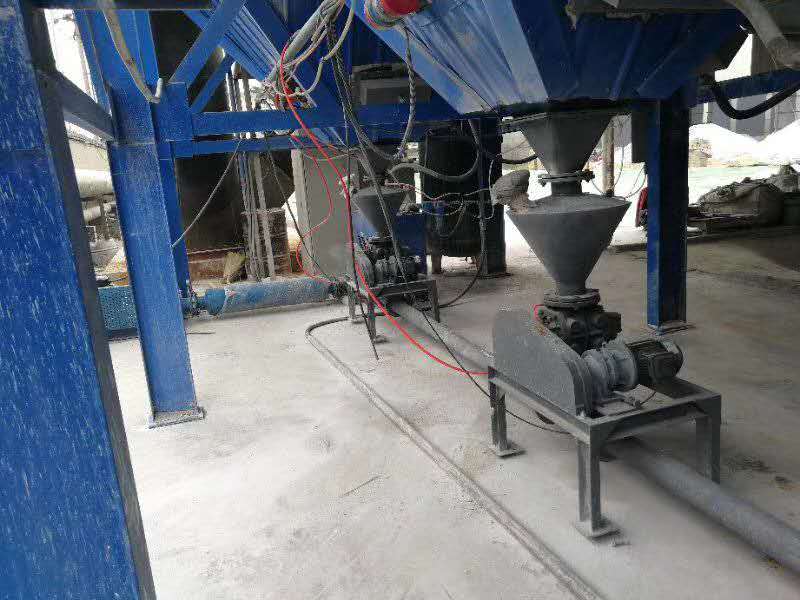
The powder pneumatic conveying system, also known as vacuum conveying equipment, uses a fully enclosed conveying system to transport bulk materials (powder, particles), which completely eliminates environmental pollution and harm to operators caused by material leakage, as well as environmental pollution to materials in the surrounding environment. This is the development direction of powder pneumatic conveying systems in recent years. There are various forms of negative pressure sources for vacuum feeders, such as vacuum generators, vacuum pumps, Roots blowers, etc. The advantages of a vacuum generator are small size, light weight, and easy installation. It can be applied in clean workshops. It uses jet technology to generate high vacuum under the action of compressed air, achieving material conveying equipment without the need for mechanical vacuum pumps, no lubrication components, and almost no moving parts, fully meeting GMP requirements. Pneumatic vacuum conveying equipment systems are mainly used for conveying and feeding solid materials such as powders and granules in the pharmaceutical and food industries. Can be used in conjunction with major process equipment such as mixers, granulators, tablet presses, coating machines, capsule filling machines, packaging machines, etc; With its continuous promotion and application in China, it will undoubtedly optimize the production process in this field, effectively reduce cross contamination and dust, and play a positive role in improving the quality of drug production.