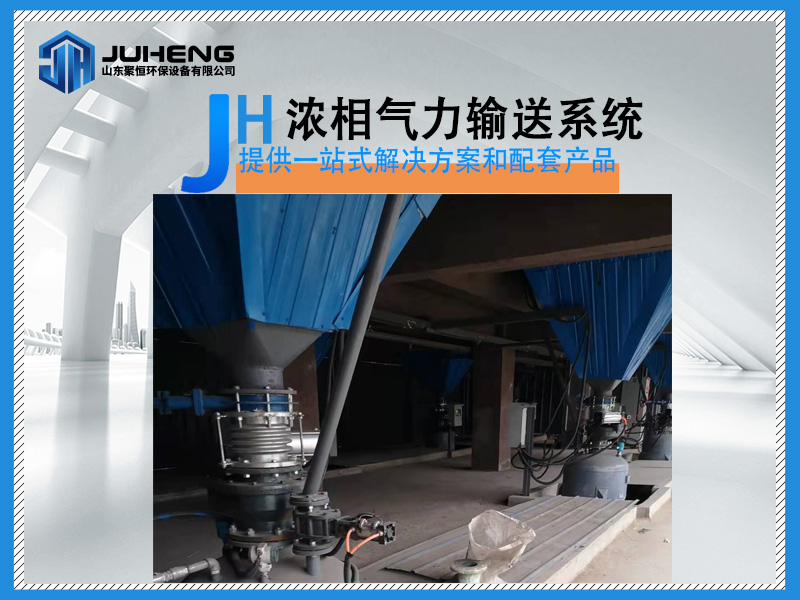
Analysis of common pipe blockage problems in pneumatic conveying
The common blockage problems in pneumatic conveying systems can be summarized as follows:
Material performance impact:
When materials have a certain degree of viscosity or contain viscous substances, they are prone to adhere to the pipe wall during transportation, especially at bends. Prolonged accumulation can lead to a decrease in cross-section, increased resistance, and ultimately blockage.
Some materials, such as dry plastic powder, may not have viscosity, but the friction during transportation can cause particles to become charged and generate gravity, which may also adhere to the pipe wall or clump. The faster the transportation speed, the more severe the blockage.
Materials containing debris such as wooden blocks, cotton yarn, etc. can also easily cause blockages.
Pipeline quality impact:
Misalignment of pipe joints, rough inner walls of pipes, and improper welding after abrasion in pipeline systems can increase local resistance and lead to blockage.
Due to inadequate sealing at the pipeline interface or worn through bends, air leakage may occur midway, and a decrease in gas velocity can also cause blockages.
The impact of changes in gas source parameters:
A malfunction in the gas supply system, insufficient gas supply or pressure, can cause a decrease in airflow velocity, an increase in mixing ratio, and material settling and blockage.
Some materials may cause blockage due to high humidity in the gas source.
The impact of operating methods:
The feeding system cannot supply materials evenly, and when the feeding amount exceeds the design capacity, it is easy to cause blockage.
Reversing the sequence of operations, such as opening the conveying air source before sealing the sealing component, or unloading the material with a full but not smooth discharge, may lead to blockage.
Design parameters and pipeline layout impact:
Excessive mixing ratio, low flow rate, insufficient air pressure and flow rate, or unreasonable pipeline layout (such as too small curvature radius of bends or too many bends in a short distance) can all easily cause blockage.
Corresponding measures should be taken to address the above issues, such as optimizing material pretreatment, improving pipeline quality, stabilizing gas source parameters, standardizing operating methods, and designing parameters and pipeline layout reasonably, in order to reduce or avoid the occurrence of pipe blockage.