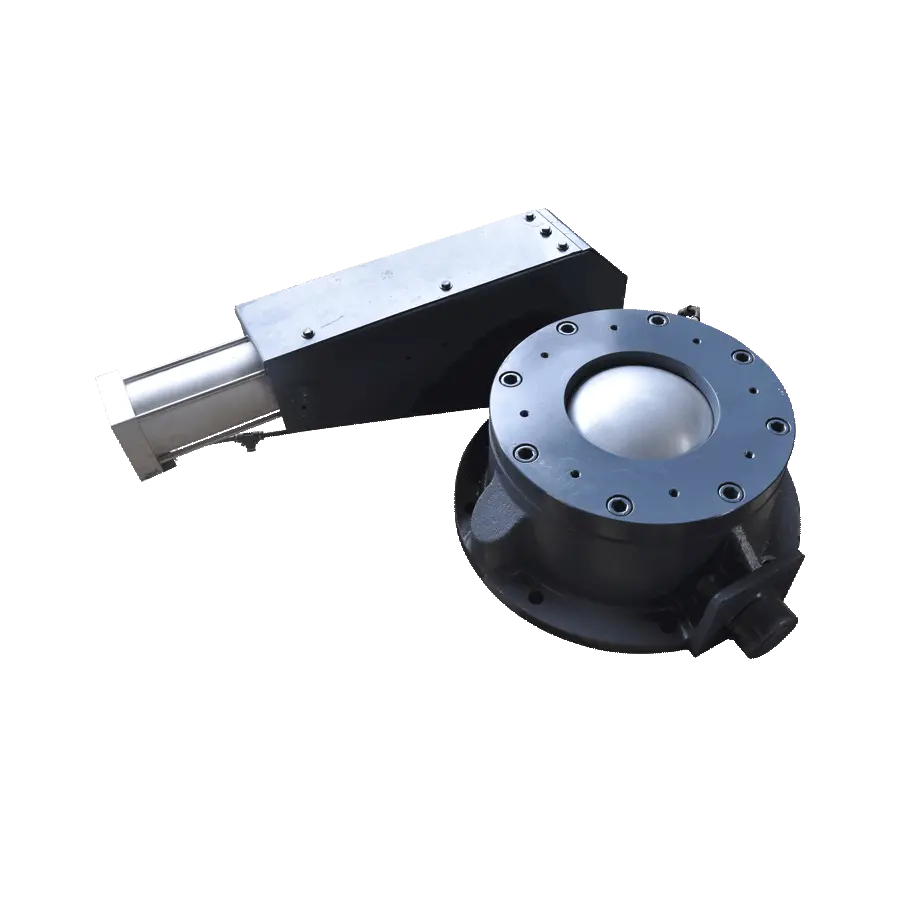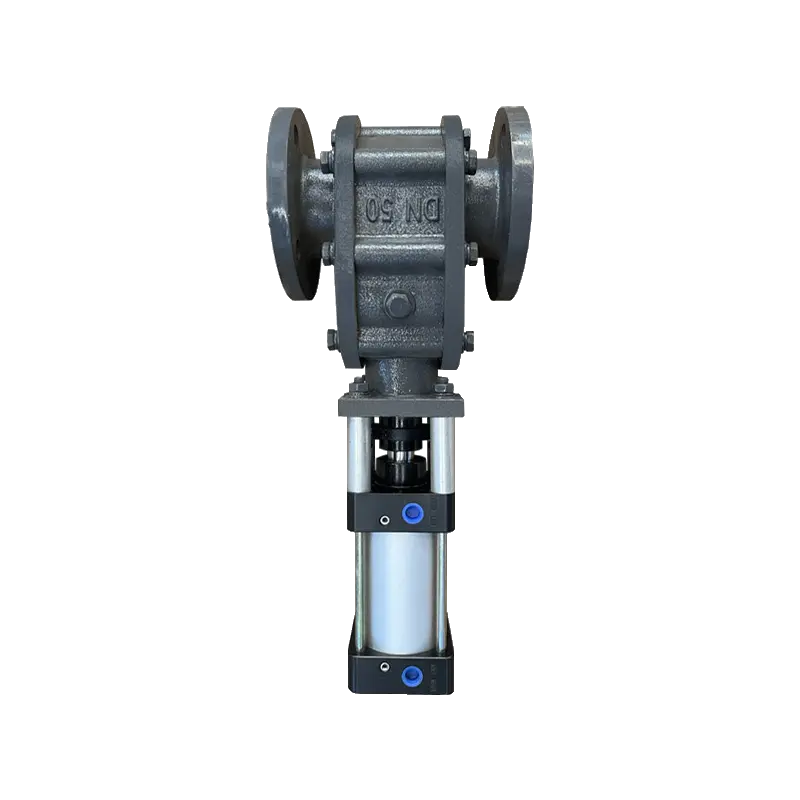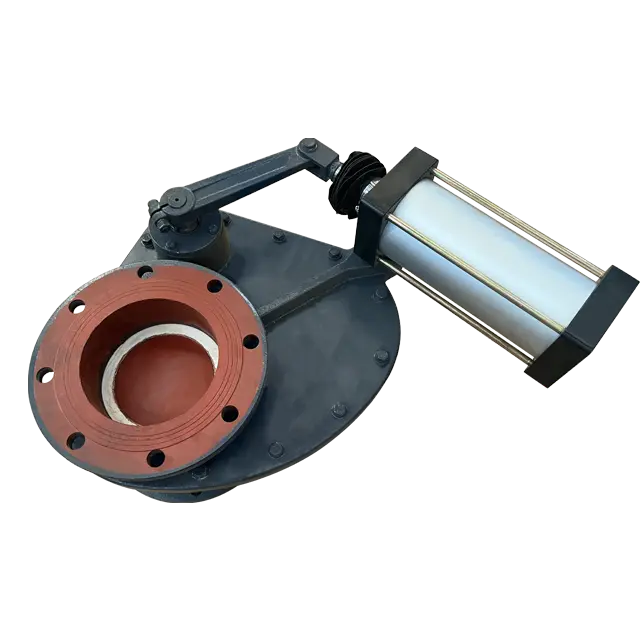
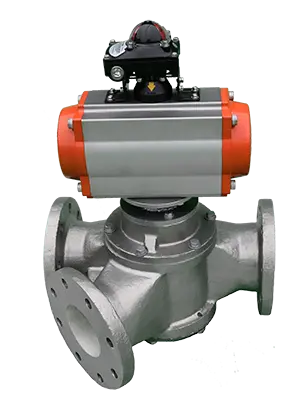
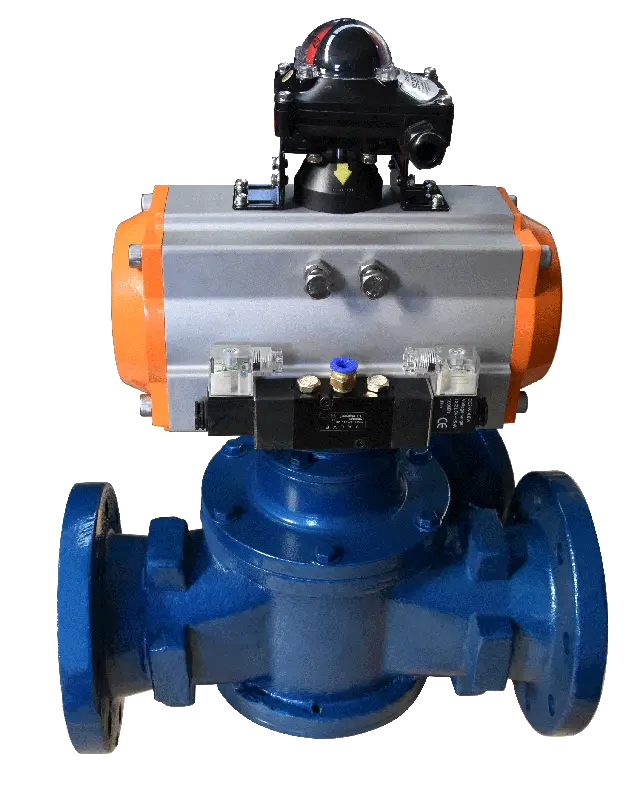
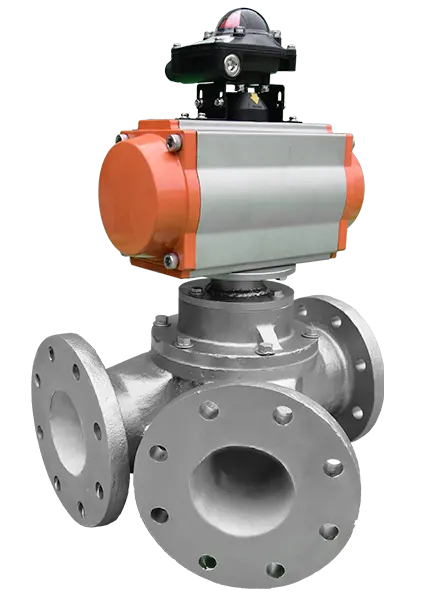
Pneumatic shunt valve
Features:
- Pneumatic drive with fast direction change and stable action, suitable for automation control
- Smooth flow channel without dead corners, no accumulation or blockage of materials, low conveying resistance
- Reliable sealing to prevent air leakage and material leakage
- Wear resistant and durable, with a long service life
- Compact structure, small volume, easy installation and maintenance
- Strong applicability, capable of conveying powder and granular materials
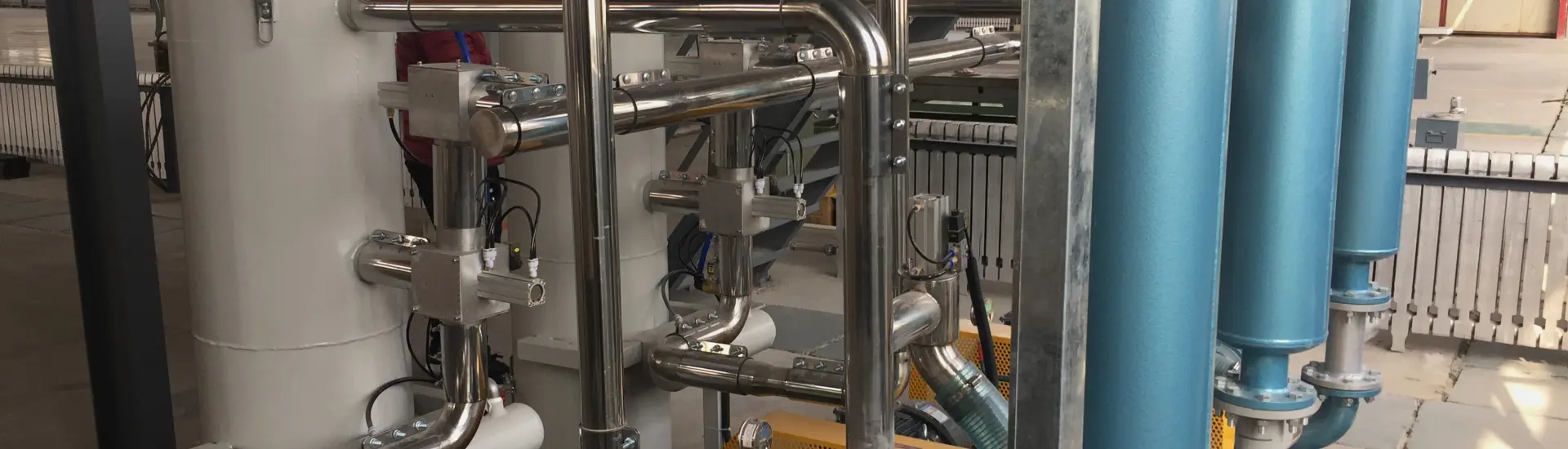
Pneumatic shunt valve is a key equipment used for pipeline diversion, merging, and reversing in pneumatic conveying and powder conveying systems. It is powered by compressed air to achieve automatic flow direction switching of materials such as powder, particles, and powder particle mixtures in pipelines. It is widely used in industries such as grain, feed, building materials, chemical, pharmaceutical, plastic, and environmental protection.
The product is driven by pneumatic actuators, with a compact structure, fast action, and stable operation. It can achieve a one in two out pipeline connection method, meeting the continuous, enclosed, and intelligent transportation needs of automated production lines.
The valve body is made of wear-resistant materials, with smooth and unobstructed internal flow channels, no material accumulation or jamming, and a reliable sealing structure to effectively prevent dust overflow, material leakage, and air leakage. This not only ensures a clean production environment, but also improves conveying efficiency and system stability.
Valves can be equipped with components such as solenoid valves, limit switches, signal feedback, etc., which can be easily connected to PLC and DCS control systems to achieve remote control, automatic reversing, status monitoring, and fault alarm, greatly reducing manual operation intensity and improving the automation level of the entire conveyor line.
It has the advantages of fast action response, long wear resistance, good sealing performance, easy installation and maintenance, and wide applicability. It can work stably in various conveying environments such as positive pressure, negative pressure, and low pressure, and is an indispensable automatic reversing device in modern powder engineering and pneumatic conveying systems.